
APGA National Publicity Secretary, Mazi Opara Ejimofor, has criticised the senator representing Anambra North Senatorial District, Tony Nwoye, over what he described as “minimalist” advice to the Board of the South East Development Commission (SEDC) regarding the type of projects it should prioritise for the development of the South-East region.
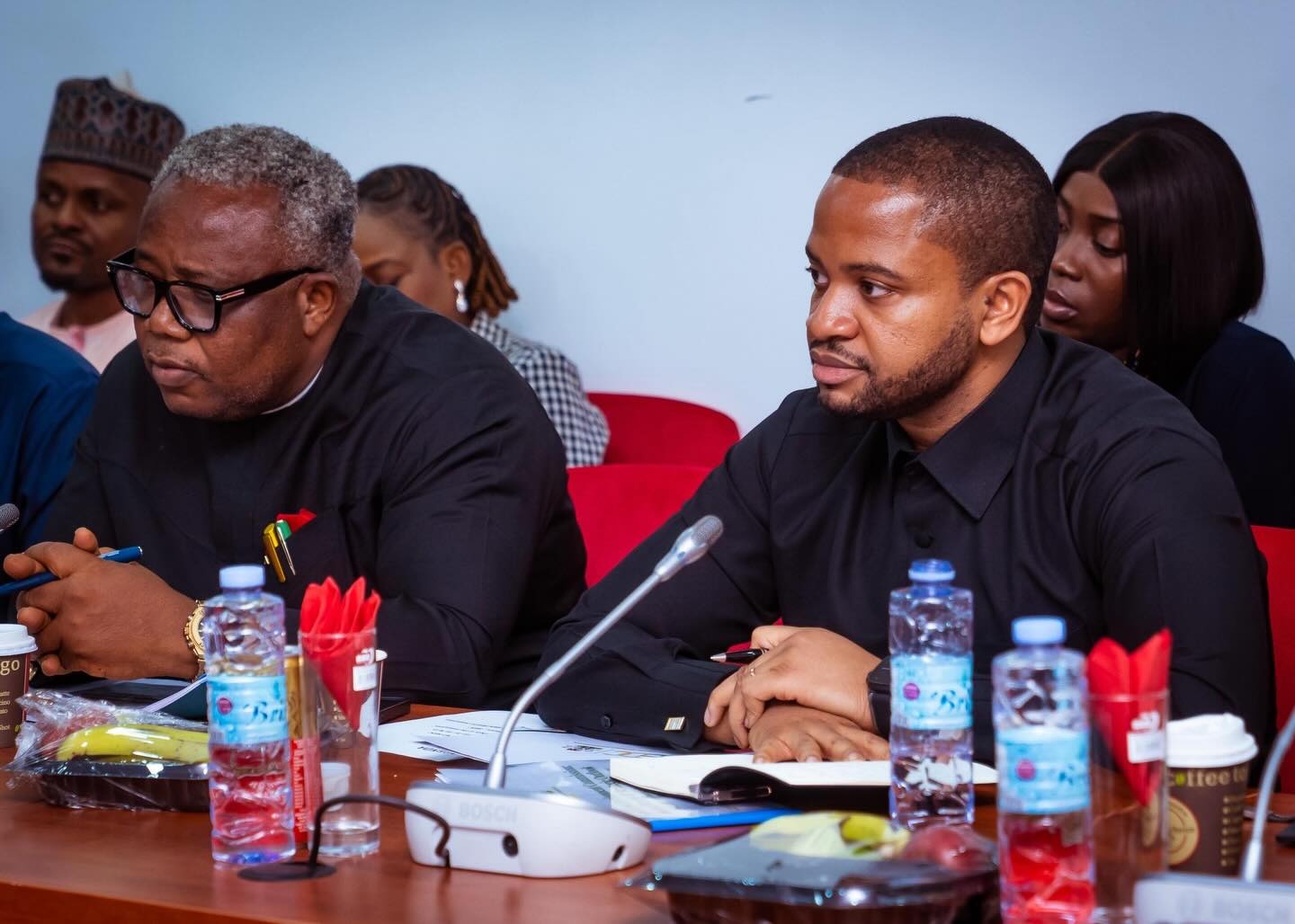
Earlier this week, the SEDC, led by its Managing Director, Mark Okoye, appeared before the Senate Committee on the SEDC, chaired by Orji Uzor Kalu, to present the Commission’s 2026 budget proposal and strategic outlook.

During the session, Senator Nwoye expressed strong reservations about what he described as inflated budgetary allocations for conferences and investment promotions.
He characterised some of the projected figures as unrealistic and urged the Commission to prioritise infrastructural development instead.
“I went through your presentation and wish to appeal to you and your team to focus more on developing infrastructure in the region,”
“It will not augur well for you to spend so much money on conferences and investment promotion—$20 billion, $50 million—those figures are not realistic.
“Let us talk about how someone in Bende, Umunnachi, Umudioka, or Awgu can feel the impact of the SEDC—not about $20 million or $30 billion. That does not interest me.”Nwoye said.
The senator also questioned proposed allocations for security operations and the procurement of surveillance equipment, warning against what he termed a duplication of efforts.
“I saw in your budget proposal N3.5 billion for regional security operations in 2026 and N10.5 billion for the procurement of equipment, including drones, CCTV cameras, and other control infrastructure,”
“I am not saying security is unimportant. However, governors are the chief security officers of their states and already receive security votes. The Federal Government also allocates substantial funds for security. There is no justification for the SEDC to commit such huge sums to security again.
“We have schools across the region in dire need of infrastructure, instead of putting money into investment promotions that are unrealistic,” Nwoye argued.
Ejimofor in a swift reaction, urged the SEDC Board to disregard what he described as “minimalist prescriptions” from Senator Nwoye and like-minded lawmakers.
According to him, the senator’s comments reflect a limited understanding of the statutory role and strategic mandate of a regional development commission.
“What is the business of a regional development commission engaging in micro-level interventions that can easily become tools for political patronage and abuse?”
“At the recent budget defence, Senator Nwoye demonstrated a lack of in-depth knowledge of how a development commission serving five states should function. He appears to equate its role with that of legislators preoccupied with tokenistic constituency projects.” Ejimofor queried.
Ejimofor said he aligned more closely with Governor Soludo’s position at the SEDC Vision 2050 event in Enugu, where the governor reportedly cautioned against reducing the Commission to the level of the Niger Delta Development Commission (NDDC), which he claimed had become limited in scope and impact.
“Apart from scattered, often non-functional buildings and projects distributed among cronies, what flagship, region-wide project can be credited to the NDDC in the entire South-South?” he asked.
He insisted that the SEDC leadership must think in “mega and macro” terms, focusing on transformative projects that promote regional integration rather than small-scale interventions.
“The Managing Director is not there to build primary healthcare centres in Nsugbe or Ifitedunu, nor to install streetlights in Ngor Okpala. He is not there to usurp the responsibilities of local governments or replace senators in executing constituency projects,” Ejimofor stated.
Instead, he suggested that the Commission should consider large-scale initiatives such as rail lines connecting South-East states to one another and to neighbouring regions, as well as cross-cutting institutional reforms capable of driving sustainable economic growth.
He further argued that strategic investments in social reorientation and civic education were equally vital.
“No investment is too significant in addressing the psychological and social consequences of the so-called Biafra struggle on our people. I support every legitimate investment channelled towards reorientation,” he said.
Reiterating his position, Ejimofor added: “Mark must not listen to Senator Tony Nwoye and others who have yet to fully grasp the scope of his mandate if he intends to succeed.”
About Author