

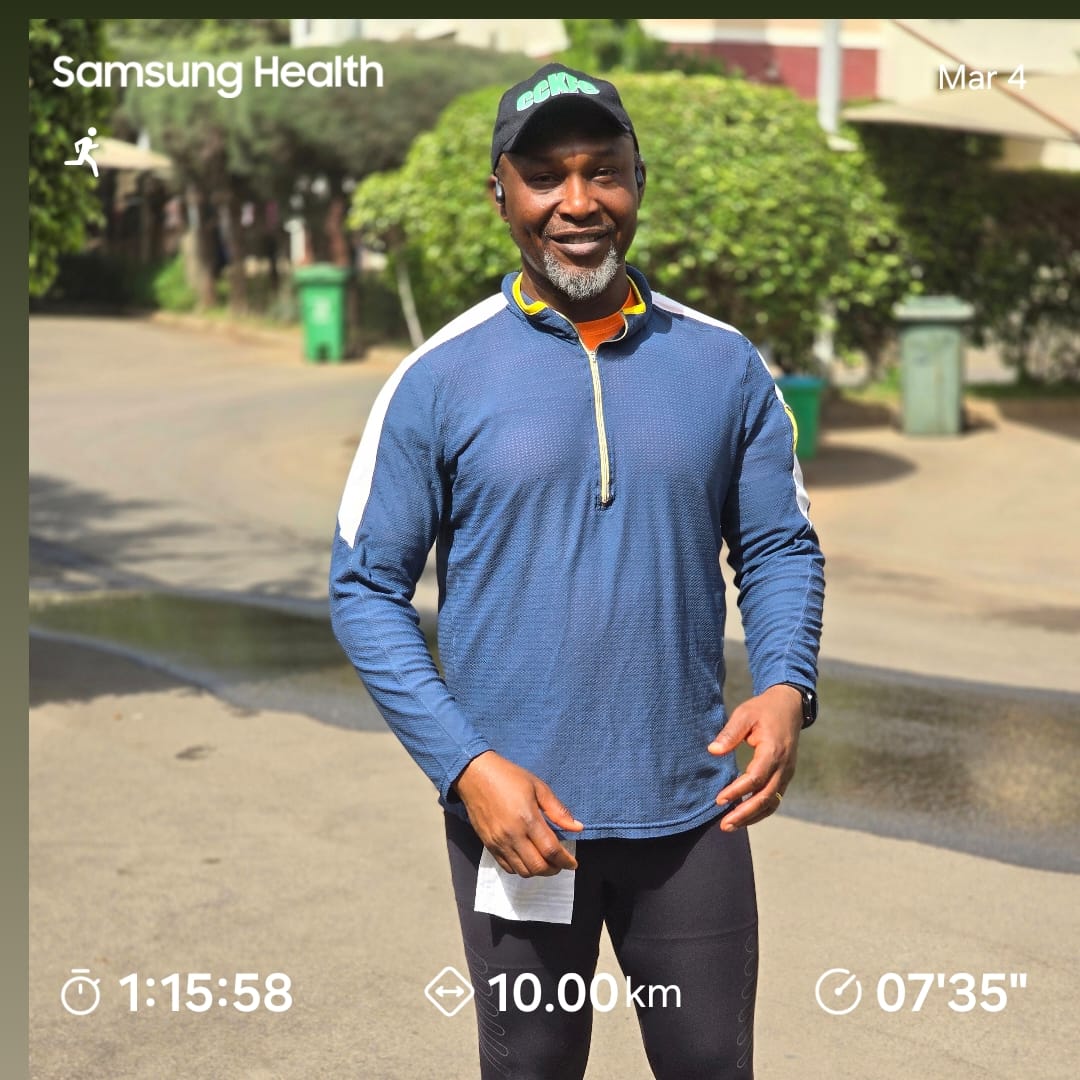
Former Minister, Osita Chidoka, has shared a profound shift in his approach to fitness, emphasizing that “fitness at 35 is different from fitness at 50”. In a candid post, Chidoka revealed that as he approaches 55, he’s prioritizing sustainability over speed, focusing on longevity rather than just physical fitness.
He wrote:
“At 54, approaching 55, I have begun to rethink what fitness means.
“For years, I wore speed like a badge of honour. Six-minute kilometres. Heart racing drenched in sweat.
 “The satisfaction of outrunning my younger self. Ten years of data — sleep, heart rate, labs — all said I was “fit.”
“But beneath the surface, my body was telling a deeper story.
“Sustained speed work at over 100kg weight repeatedly pushed my heart rate into spikes that triggered a strong stress response.
“High-intensity running raises cortisol. Useful in bursts — yes. But chronically elevated, especially in midlife, it disrupts sleep, delays recovery, strains hormonal balance particularly testosterone and quietly taxes long-term wellbeing.
“I was fit — but at a price. Over the past three weeks, I made a deliberate shift.
“I now keep my heart rate mostly in the 120s, never above 140. I walk and jog at a pace where I can hold a conversation.
“Once a week, I still do speed and shuttle runs and mid week I do mid-tempo run. I’ve added bodyweight work: push-ups, squats, and lunges. Strength for durability.
“It was not easy. The urge to chase a six-minute kilometre was strong. Identity is powerful.
“But fitness at 35 is different from fitness at 55.
“In your 30s, you can out-train stress. In your 50s, you must manage it.
“The results are counterintuitive but clear: deeper sleep, steadier energy, faster recovery.
“Day before yeaterday I did 10.64km in 1 hour 41 minutes — not a spectacular pace, but deliberate and sustainable.
“Today, I finished 10km at 1:15 minutes as today is my mid tempo day sustaining a pace of 7.35 mins per kikometre.
“This is a shift — from just fitness to fitness for longevity.
“If you are in your 50s, speak to a doctor who understands exercise. Look at your data. Life is personal; what works for A may not be optimal for B.
“I am no longer training solely for speed.
“I am training for the long road ahead. I want to run injury-free in my 60s.”
About Author