

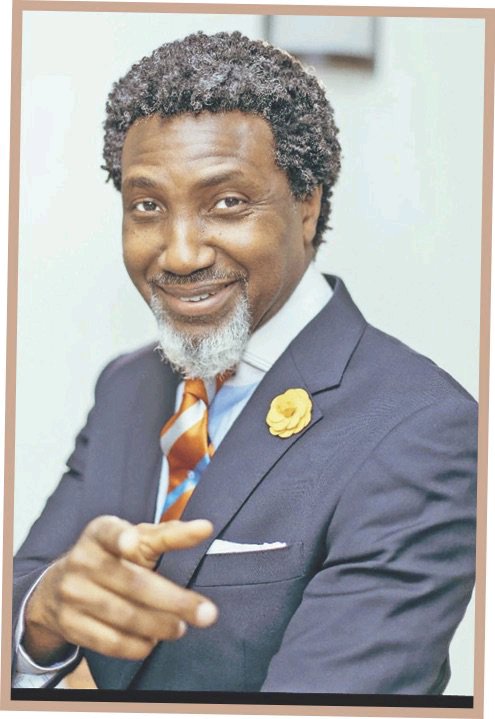
Apostle Goodheart Ekwueme, the Apostolic Lead of Revival House of Glory International Church (ROGIC) and Horn of Revival Ministry (HORM), has spent 40 years in ministry.
Raised as an Anglican, he said he got transformed by a powerful encounter with Christ at 16. But that encounter caused a strained relationship between him and his father, Nigeria’s first elected Vice President, Dr Alex Ifeanyichukwu Ekwume. He also narrowly escaped a religious crisis as a young pastor.
 These experiences, he claimed, deepened his calling. In his words, his ministry grew through three defining seasons of zeal and challenge.
In this interview the cleric, an author of 40 books, spoke on his life and ministry, the impact of youth ministry and his vision for continued outreach, prayer, and mentoring in the years ahead.
 How would you summarise your journey from when you were born again at age 16 to now celebrating 40 years in ministry?
It has been a remarkable journey, one that I intriguingly see as unfolding in distinct seasons. I would describe these as three unique seasons spanning these 40 years, each marking what I humorously refer to as three missionary journeys of various activities that together define the entire period. I am deeply grateful to be alive and well, having walked with the Lord thus far, and remain eager to witness even greater things in the years to come.
Reflecting on your childhood, what moments stood out for you that were pivotal to this journey?
My background has greatly influenced me. Born into an Anglican family, I was raised by my parents with strong Christian values, I was baptised and confirmed in the Anglican Church under a nurturing and powerful guidance. This upbringing laid a solid moral foundation, and by the time I was 16 going on 17, I had a personal encounter with Christ when I got into Ahmadu Bello University, Zaria, in Kaduna State which transformed my faith from simply learned morals to a profound relationship. This shift was important because it made me accountable not just to my parents, myself or those around me but ultimately to God. Attending church regularly with my parents and being taught Bible lessons, and attending these spiritual milestones prepared me well for that moment of personal encounter with Christ.
What was it like to turn to Christ at 16, a time when most young people are eager to explore the world?
As you noted, many friends experimented at that age, and I wasn’t completely exempt—teenage years naturally involve trying things out. While some took it further, I’m grateful that from early on I took my walk with the Lord seriously. After finishing secondary school at Kings College, Lagos, I was admitted to Ahmadu Bello University in Zaria. During my first year, I met a Christian elder who shared the gospel simply and powerfully. Led in prayer, I opened my heart to the Lord, and my heart was truly on fire for Jesus—a genuine and joyful experience. From that moment, my faith grew rapidly through study, prayer, and gathering spiritual materials. This marked the beginning of my spiritual journey as a young teenager.
You’ve often shared how you and your friends were so passionate about your new found faith that it worried your parents. What was that experience like for you?
Working with young people is truly engaging because their zeal and passion are often infectious. When I got born again, I embraced Christianity full of such fervour. However, many young people exhibited enthusiasm that outpaced their knowledge and maturity, making it a challenge to balance energy with wisdom. During our time, we encountered many passionate youths, but it took effort to channel that zeal with the necessary maturity. Despite this, their sincerity and honest intentions were clear—it was part of their growth process. Anyone involved in youth ministry must recognise the responsibility to guide this powerful force constructively, as passion can lead to significant positive impact or unintended consequences if not properly directed. This dynamic of youthful passion balanced with maturity remains a vital challenge and opportunity in ministry.
Have you maintained friendships with people from that era, and what impact have they had on your ministry?
One of my most rewarding relationships stems from that generation when we all came to faith. Quite a number of us who have remained steady in the faith often find ourselves reflecting on the journey and how long it has been. We have had many reasons to rejoice together and to weep together over different situations in our lives—family, business, ministry. As the Nigerian saying goes, “it is old firewood that burns more,” so I truly cherish these relationships. They are not fleeting or casual connections; they have been tested and proven. No matter where we are, even though we don’t see or speak often due to our work commitments, whenever we connect by phone or in meetings, it feels like a spark ignites. The depth of knowing each other for so many years shines through. I have quite a few of such relationships that I have treasured over the years.
Did you face any significant challenges that tested your faith or leadership as a youth pastor that you’d be willing to share?
I experienced several challenges, but one unforgettable moment was during a religious crisis in a year I no longer recall. Living opposite the campus where I was known as a pastor, my residence was targeted. Ahead of time, I received a warning and left before the attackers arrived, but they threw stones at my flat shouting, “Where is the pastor?” It was a close call, and I am grateful to have escaped unharmed.
On a personal level, my faith journey strained my relationship with my father, Dr Alexander Ifeanyichukwu Ekwueme, Nigeria’s first elected Vice President. As a devoted Anglican and intellectual, he struggled to understand the Pentecostal faith I embraced, fearing I wouldn’t complete my university education. This caused years of estrangement, even after I graduated and completed NYSC. In 1994, I sought reconciliation in Lagos, and we reconnected deeply. Over time, he grew proud of my ministry, recognising the genuine zeal and divine guidance in my calling.
In your 40 years of ministry, what powerful miracles, especially from your time as a youth pastor, stand out for you?
Throughout my 40 years as a minister of the gospel and a pastor, countless significant and impactful moments have shaped my journey. Yet, one experience stands out most profoundly to me: witnessing the genuine transformation of lives I once served. I remember youths who were once considered problematic—struggling at home, performing poorly in school, or drifting morally. However, when these young people come together in fellowship with others who exhibit sincere passion and zeal, it sparks within them a new motivation. They begin to improve their academic performance and realign their moral compass, channelling their energy into positive and purposeful directions. Observing this metamorphosis—their growth from troubled pasts into inspired, driven individuals—has been one of the most meaningful and rewarding aspects of my ministry.
Is your background as a youth pastor the main reason your ministry focuses heavily on youth initiatives like the Winning Today on campus programme?
I genuinely love spending time with young people, recognising how fortunate I was that God reached me early, sparing me from struggles many face due to poor choices. This drives my passion to serve and guide youth to find the Lord early, helping them live purposeful, focused lives aligned with God’s plan. It feels like giving back—using my story to connect with youth, especially through the Winning Today outreach programme. For over two decades, Winning Today has operated on campuses across cities, sharing Christ’s love while running a reorientation programme to channel students’ energy into building integrity, character, and a genuine love for God, leading them to meaningful life directions.
Why are you so intentional in celebrating 40 years in ministry?
This milestone means a great deal as it marks a significant spiritual journey in my life. For many years, I didn’t truly celebrate my birthday in Christ until last year when God impressed upon me the importance of honouring Him on reaching 40. This led me to plan on releasing 10 new books dedicated to Jesus, joining 30 previous ones, symbolising one book for each year of my life in Christ. The number 40 holds deep biblical significance, representing periods of preparation, trial, transformation, and spiritual fulfilment, as seen in Moses’ 40 years in the wilderness, Jesus’ 40 days of fasting, and the Israelites’ 40 years wandering. It symbolises new life, growth, and readiness for a new task or purpose, reinforcing that this milestone is not an end but a launching point for greater things ahead. I believe God wants me to celebrate this as a time of wisdom, maturity, and a new chapter aligned with His plan, showing faithfulness and trust in His guidance throughout my journey.
After leadership roles at Winners Chapel and House on the Rock, how did these experiences prepare you for your own ministry, RHOGIC?
The truth is, I have always had a passion to serve, and over the years, I have embraced opportunities to do so. Honestly, my personality isn’t drawn to being in the spotlight or on stage, so serving in ministries like Winners Chapel and House on the Rock was a true joy for me. These roles allowed me to learn and grow immensely, equipping me with the experience that has prepared me for what I am doing today. My journey has been one of continuous learning and development, and I often remind people that those unwilling to learn now will struggle to lead effectively in the future because what we learn today forms the foundation for discipling and guiding others you are called to lead.
Which of your 40 books are most special to you, and what key lessons do you hope readers will take from them?
The 40 books cover a wide range of topics, but my passion and forte shine through in many of them. These key themes include Revival, Prayer, Consecration, Brokenness, and Christ-likeness—subjects that define my passion, calling and brand. While the books touch on various aspects of faith, wisdom, and related topics, the ones closest to my heart are those that express this central passion: Prayer, Revival, Consecration, and Brokenness. These are the foundational elements of what I believe make up the essence of my ministry and message.
Being a man of prayer, you have successfully established RHOGIC Radio and GPPA, which now airs on 29 terrestrial radio stations. What is the back story of these platforms?
On September 1, 2017, inspired by the Holy Spirit, I launched GPPA (Global Prophetic Prayer Altar) to pray for Nigeria amid severe political challenges and fears of national disaster. Initially unfamiliar with this format, I began a one-month virtual prayer initiative, three years before the COVID-19 pandemic made such online gatherings common. God then directed us to extend the prayers through December 2017, revealing GPPA’s broader mission beyond Nigeria with four key purposes.
GPPA became a lasting commitment, reshaping my life as I dedicated daily mornings at 5 a.m. to prayer. Though initially difficult, consistent practice strengthened my prayer life, and over eight years, GPPA has grown into a ministry discipling individuals and nations. Anyone who commits to three months on this altar experiences deep growth in prayer.
Expanding beyond social media, GPPA reached 29 terrestrial radio stations and streams via RHOGIC online radio, delivering teachings and worship globally. These paid airtimes, supported by God’s provision, grew even during the pandemic, extending blessings worldwide wherever there is internet access.
What has been the feedback from listeners on the terrestrial radio stations?
It’s been amazing and humbling because, as you may know, radio stations don’t require payment like the internet does. So people who often can’t afford smartphones or internet access can still listen to radio nationally across Nigeria. We encounter people—who you probably wouldn’t meet on an average day—telling us how much their lives have been impacted. In villages and cities, even some who aren’t fluent in English, it amazes me how they hear English during the time of prayer and feel blessed. That, to me, is a huge miracle. All of this is happening across Nigeria. The miracle, if I may call it that, of terrestrial radio is this: although the stations are based in cities and states, many broadcast beyond those boundaries. So their reach is immeasurable. Potentially, multiple millions are connected to these broadcasts—people in planes, trains, on roads, commuting. It’s truly refreshing to get feedback from those you otherwise would never see or meet in a lifetime.
RHOGIC just turned eight, and RIHA-CC was still young when you launched it. Yet, you’ve already held it in multiple Nigerian cities and beyond. Why?
RIHA-CC an acronym for Revival is Here Again City Conference, was born from a clear vision. One day, while at home preparing to pray for one of my spiritual sons who had relocated with his family to the US, I found myself speaking prophetically over him. But I sensed it was about much more than just him. The Lord spoke of 12 nations, 12 cities. I saw the purpose: to raise prophetic altars across various cities and nations through these conferences. We began doing this faithfully as the word came. I believe the first conference of its kind happened the following year. We met in a few countries—some more than once, others twice or even three times. The goal was to raise those altars in the cities, focused on the kingdom, the church, and the city itself. This was not about a local church simply hosting a conference; it was about uniting the city to bring about a better life together.
You previously witnessed a religious crisis whilst at ABU Zaria. Today, it seems worse with the church decided on how to respond. What’s your challenge to the government to secure peace and protect Nigerians and resources?
Truthfully, we are in a severe crisis that we are fully aware of. The violence is real and escalating, with deadly killings confirmed by stark statistics. There is a clear mission to purge Christianity from our nation. I urge the government to act boldly and decisively to secure our country, which is blessed with mineral and energy resources, so we can combat this long-standing menace and restore peace. Only in a peaceful environment can people be productive, grow, and feel a true sense of belonging and ownership of our nation’s resources. This is critical for national stability and progress.
How are you able to balance your roles as pastor, family man, and leader of numerous assignments God has placed in your hands?
My assignment is intense and requires multitasking. Sometimes I wish there were more than 24 hours in a day, but that’s all God gives us. I prioritise the most important tasks and delegate others. Teamwork is essential, as no one is called to do everything— it takes a team to make the dream work.
I deliberately prioritise my spiritual walk because inner strength helps me handle external pressures. A healthy relationship with God beyond ministry duties is vital since without spiritual nourishment, I can’t serve others effectively. Over time, my love for God and people has made managing my responsibilities easier.
People often wonder how I seem to be everywhere at once, but it’s just love for others that drives me. Family remains important, and I make time to relax and exercise, like playing tennis, to maintain balance.
As the son of the first vice president of Nigeria, known for integrity and passion for Nigeria, many expected you to follow the same path. How do you respond to these expectations?
I always emphasise that I believe in divine purpose—each person is given specific assignments from God. We are not meant to do everything but to complement one another. If I fulfil my role and you fulfil yours, we create a better world. If roles are confused, chaos ensues. Early on, I recognised my calling along this path, primarily as a clergyman, though it’s not all I do. My father was a multifaceted man—politician, academic, and educationist with seven degrees. While he may have chosen to have a political legacy, he grew to respect and celebrate our shared divine call, bringing honour to our family.
You are from the South-East, currently affected by IPOB’s Monday sit-at-home orders. What advice do you have for the national and state governments there?
For those serving in government and politics, I commend your courage. It takes true bravery to step forward and serve, while many find it easier to criticise from the sidelines—like football fans who say, “That striker should have scored,” without experiencing the pressure of the game. I celebrate your decision to engage.
However, I challenge all leaders to serve sacrificially. Our country faces significant challenges with limited resources. Like a family in financial strain, the head must lead by example in making sacrifices. Leaders in Nigeria should seriously consider reducing perks and privileges. Decades ago, when economic conditions were similar or better, this was standard practice. Today, such sacrifices set a powerful example and inspire collective commitment.
Security remains a critical concern, requiring shared effort without a simple solution. Still, leaders must cultivate a safe environment because security is vital for economic growth and effective governance.
You’ve led several ministry innovations like JAM Festival, RHOGIC Radio, and GPPA’s 29 radio stations. Now with GEMI, some might ask: haven’t you taken on enough already?
After 40 years of serving the Lord, the question I face is, what next? Vision is progressive, unfolding in phases as God guides us. GEMI, which stands for Goodheart Ekwueme Ministries International, is my new focus. It serves as an umbrella for personal passions beyond traditional church ministry. GEMI will allow me to formally engage in mentoring young people and offering myself to mentorship programs.
A significant part of GEMI is dedicated to doing good works, reflecting Jesus’ ministry which cared not only for spiritual well-being but also for the physical needs of people. GEMI will actively reach out to the less privileged—such as the poor, widows, and prisoners—combining foundation-like charitable activities with ministry work.
Inspired by Matthew 5:14-16, GEMI aims to let its light shine through good works, giving glory to God. While I have engaged in charity before, GEMI will provide better structure and systems for this mission. This platform will also help continue and expand the values and initiatives already started under my ministry.
About Author