

Atlas Petroleum owned by billionaire oil magnate Arthur Eze, has lost its stake in a strategically important offshore gas licence in Equatorial Guinea following a dispute with operator Chevron.
The company previously held a 27% interest in Block I, which includes the Aseng field and is central to Equatorial Guinea’s gas export system.
The stake has now been transferred to state oil company GEPetrol, which already owned 5%, following allegations that Atlas delayed payments linked to licence costs.
 Meanwhile, Chevron had spent months trying to disengage from its Nigerian partner, arguing the company failed to meet financial obligations.
Consequently, the ownership change removes a major obstacle to the long-delayed Aseng Gas Monetisation Project, expected to require several billion dollars in investment.
Under the revised structure, GEPetrol’s enlarged stake will be carried by Chevron during development, with costs recoverable from future production, allowing the project to proceed without immediate strain on state finances.
Prior to the latest development, OilPrice.com reported that Equatorial Guinea signed a Heads of Agreement with Chevron to raise GEPetrol’s stake in the Aseng project to 32.55%, up from its previous 5%.
At the time, Atlas Oranto had already been sidelined from the project.
The move reinforced the government’s push to consolidate control over gas development under its Extended Gas Mega Hub strategy.
The agreement was signed in the presence of senior government officials, Chevron executives, and the U.S. ambassador, following negotiations initiated after Equatorial Guinea’s vice president visited Washington in 2025.
Atlas Oranto’s difficulties have also extended to Senegal, where the government revoked the Cayar Offshore Shallow exploration licence held by the company.
Authorities said the privately held oil and gas company failed to provide the required bank guarantees and carried out only limited exploration work since the block was awarded in 2008.
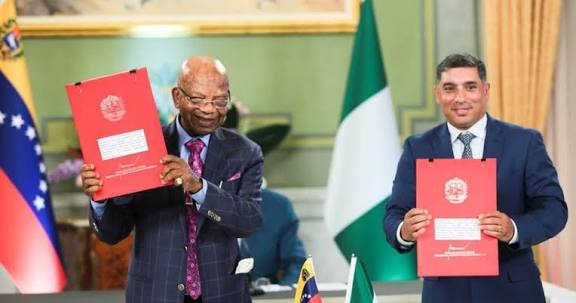
Beyond Africa, Atlas Oranto faces mounting uncertainty in Venezuela, where the group had pursued offshore gas opportunities through its subsidiary Veneoranto Petroleum.
About Author