
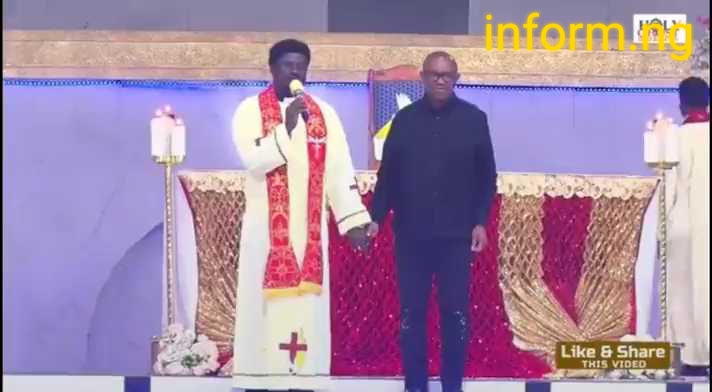
The Spiritual Director of Holy Ghost Adoration Ministry, Uke, Anambra State, Rev. Fr. Emmanuel Obimma, popularly known as Ebube Muonso, has called on Ndigbo and Nigerians to support the presidential ambition of Peter Obi ahead of the 2027 general elections.
Rev. Obimma made the call on Monday during an interview with newsmen shortly after distributing bags of rice to more than 300 elderly persons in Nkwelle-Ezunaka, Oyi Local Government Area of the State.
He said that he was convinced spiritually and otherwise that Obi possesses the qualities required to provide effective leadership for Nigeria, describing the former governor of the state as a source of hope for the Igbo people and a leader capable of moving the country forward.

The cleric said he was convinced that Obi possesses the qualities required to provide effective leadership for Nigeria, describing the former governor of Anambra state as a source of hope for the Igbo people and a leader capable of moving the country forward.
He noted that Ndigbo do not need further persuasion to rally behind Obi because of the widespread acceptance he enjoys both within and outside the country.
“As the election approaches, Igbos do not need to be told to support Peter Obi. He is the hope of every average Igbo man.
“I do not think Ndigbo will, in years to come, get a man who has attracted such broad national and international acceptance as Peter Obi”.
“My spirit tells me Peter Obi will do well and that he is the vessel needed to move the Federal Republic of Nigeria forward,” he added.
The cleric urged governors in the South-East geopolitical zone to support the vision of producing a Nigerian president of Igbo extraction, pointing out that the region had long sought justice, equity and inclusion in the nation’s affairs.
Father Ebube Muonso also paid glowing tributes to late Dim Chukwuemeka Odumegwu Ojukwu and other figures who championed the Igbo cause of peace, unity and progress as well as development.
“Their sacrifices were aimed at addressing perceived injustice, insecurity and marginalisation,” he said.
About Author