

By Uzu Okagbue
Public discourse suffers whenever governments believe they must first diminish yesterday’s achievements before asking citizens to embrace tomorrow’s ambitions. That instinct is intellectually unnecessary, historically inaccurate, and ultimately harmful to institutional development.
The attempt to justify a second airport by declaring that the first airport was “built in the wrong place” illustrates this problem perfectly. It is an argument that seeks validation through retrospective certainty rather than through prospective merit.
Every public project must be judged within the context of the questions its own administration was attempting to answer: not the questions confronting a different administration years later.
Governance is not static. Every administration inherits a different economy, different fiscal realities, different opportunities, different constraints, and often a different strategic vision. Consequently, infrastructure cannot be evaluated as though every government was solving the same problem.
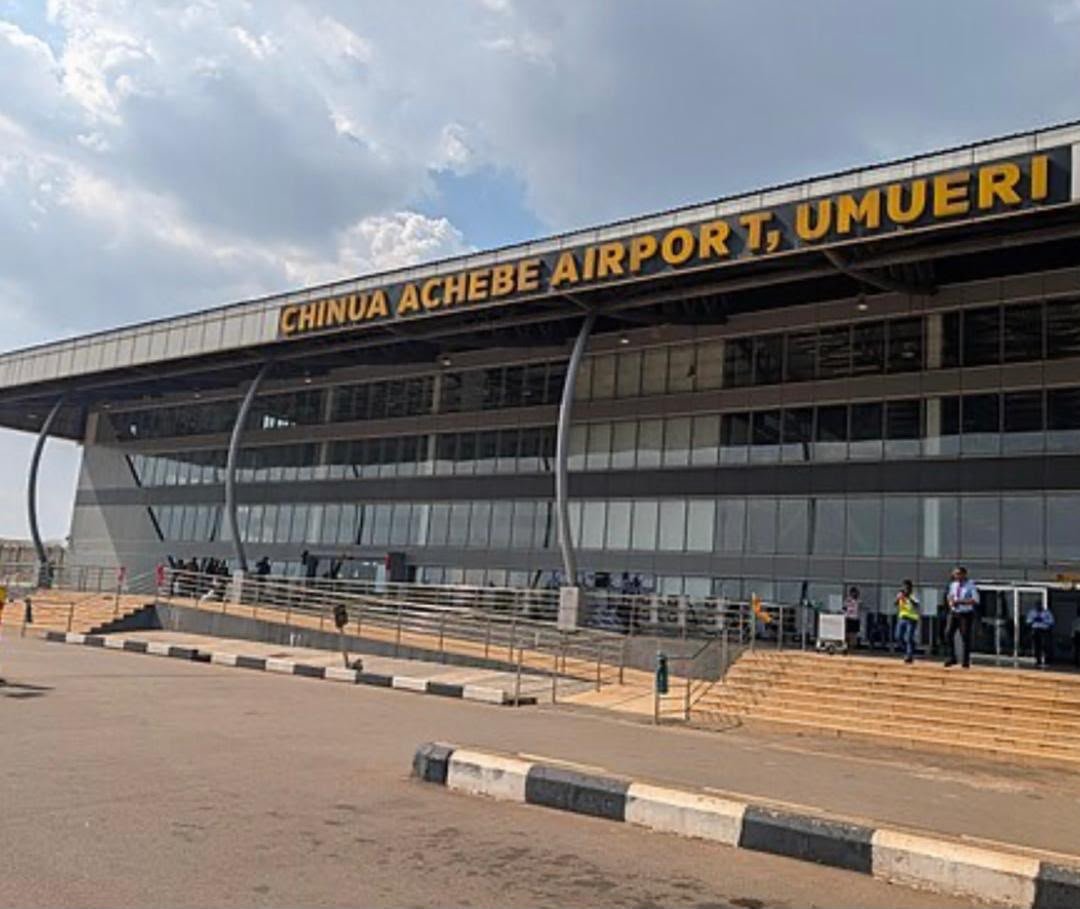
The first airport was conceived during a period when Anambra had no airport of its own. That absence imposed measurable economic, commercial and psychological costs on the state. The strategic question before that administration was straightforward: Should Anambra continue depending entirely on neighbouring states for aviation access, or should it establish its own aviation gateway?
History records the answer.
Whether another administration now believes additional aviation infrastructure is required does not retroactively invalidate that original decision. It merely reflects a different assessment of the state’s present and future needs.
That distinction is fundamental.
The argument that “the first airport was built in the wrong place” is presented as though it were an objective conclusion. It is, in reality, a contestable policy judgement.
If location alone determined airport success, aviation planning would be one of the simplest disciplines in the world. It is not.
Airport viability depends on an intricate combination of economic activity, airline strategy, connectivity, regulatory policy, cargo ecosystems, demographic trends, surrounding infrastructure, security, pricing, maintenance, investment cycles and long-term regional planning. Geography matters, but geography has never been the sole determinant of success.
To isolate location as the definitive explanation oversimplifies a complex economic system.
More importantly, such reasoning quietly assumes perfect foresight.
It assumes that planners years ago possessed complete information about future industrial patterns, airline behaviour, demographic shifts and future government priorities.
No serious student of public policy would make that claim.
Public policy is made with imperfect information.
Its success can only be judged within the realities existing at the time decisions were made.
This is why mature societies resist rewriting history to accommodate current political narratives.
They recognise that today’s solution often becomes tomorrow’s foundation.
Indeed, there is an irony embedded within the argument.
If today’s administration genuinely believes Anambra’s economy has evolved to the point where a second airport is now economically justified, then that evolution itself owes something to the cumulative investments made over successive administrations; including infrastructure that expanded the state’s economic profile and confidence.
Development is additive.
It is rarely revolutionary.
No government begins on an empty canvas.
The first airport should therefore be viewed not as an obstacle to future aviation policy but as part of the continuum that informs it.
Posterity has a remarkable way of separating political rhetoric from historical reality.
History seldom asks whether leaders criticised their predecessors effectively.
It asks whether each generation left the state better equipped than it found it.
The greatest infrastructure projects in the world were seldom justified by proving earlier projects were mistakes.
New ports did not require old ports to be failures.
New highways did not require previous highways to have been wrongly located.
Additional airports across advanced economies were not built because earlier airports were errors; they were built because economic growth eventually demanded greater capacity, specialised functions or different strategic capabilities.
Expansion is not an admission of failure.
It is often evidence of success.
This is where the present argument weakens most significantly.
If the second airport truly possesses compelling economic logic, as its proponents insist, then that logic should be sufficiently persuasive on its own merits.
It should stand on feasibility studies, logistics modelling, cargo projections, industrial strategy, export potential, investment forecasts and long-term regional planning.
None of these requires diminishing the achievement of establishing Anambra’s first airport.
In fact, the opposite approach would demonstrate greater intellectual confidence.
One can acknowledge that the first airport solved an important problem for its era while simultaneously arguing that the state’s economic ambitions have now outgrown the capacity or strategic orientation of that earlier investment.
That is a coherent policy argument.
It respects history without becoming imprisoned by it.
It allows successive governments to build upon one another instead of competing for historical ownership of progress.
That is how enduring institutions are built.
The deeper issue is therefore not aviation.
It is political culture.
When every new administration feels compelled to prove that previous administrations fundamentally misunderstood the future, governance becomes a perpetual cycle of historical revision rather than institutional continuity.
Ndi Anambra are encouraged to choose between competing narratives instead of appreciating cumulative development.
Infrastructure becomes political theatre instead of state capital.
The healthier tradition is one in which governments openly recognise the achievements they inherited, honestly identify the limitations they perceive, and explain why changing circumstances require different investments.
Such an approach elevates public debate.
It also earns greater public trust.
Ultimately, posterity is a far more reliable judge than contemporary politics.
Leaders should concern themselves less with constructing narratives that depreciate yesterday and more with building projects that history itself will vindicate.
If a second airport is truly indispensable to Anambra’s industrial future, history will eventually prove it.
If the first airport was genuinely transformational for its own era, history will preserve that truth as well.
The success of one does not require the failure of the other.
Civilisations progress when governments see themselves as authors of consecutive chapters in the same story: not competitors attempting to erase the pages already written.
About Author