
Chinedum Treasure
The Small-Scale Women Farmers Organization in Nigeria (SWOFON), Anambra state has restated its committed to constructive engagement with the State Government and other relevant stakeholders to strengthen gender-responsive agricultural budgeting and improve accountability.
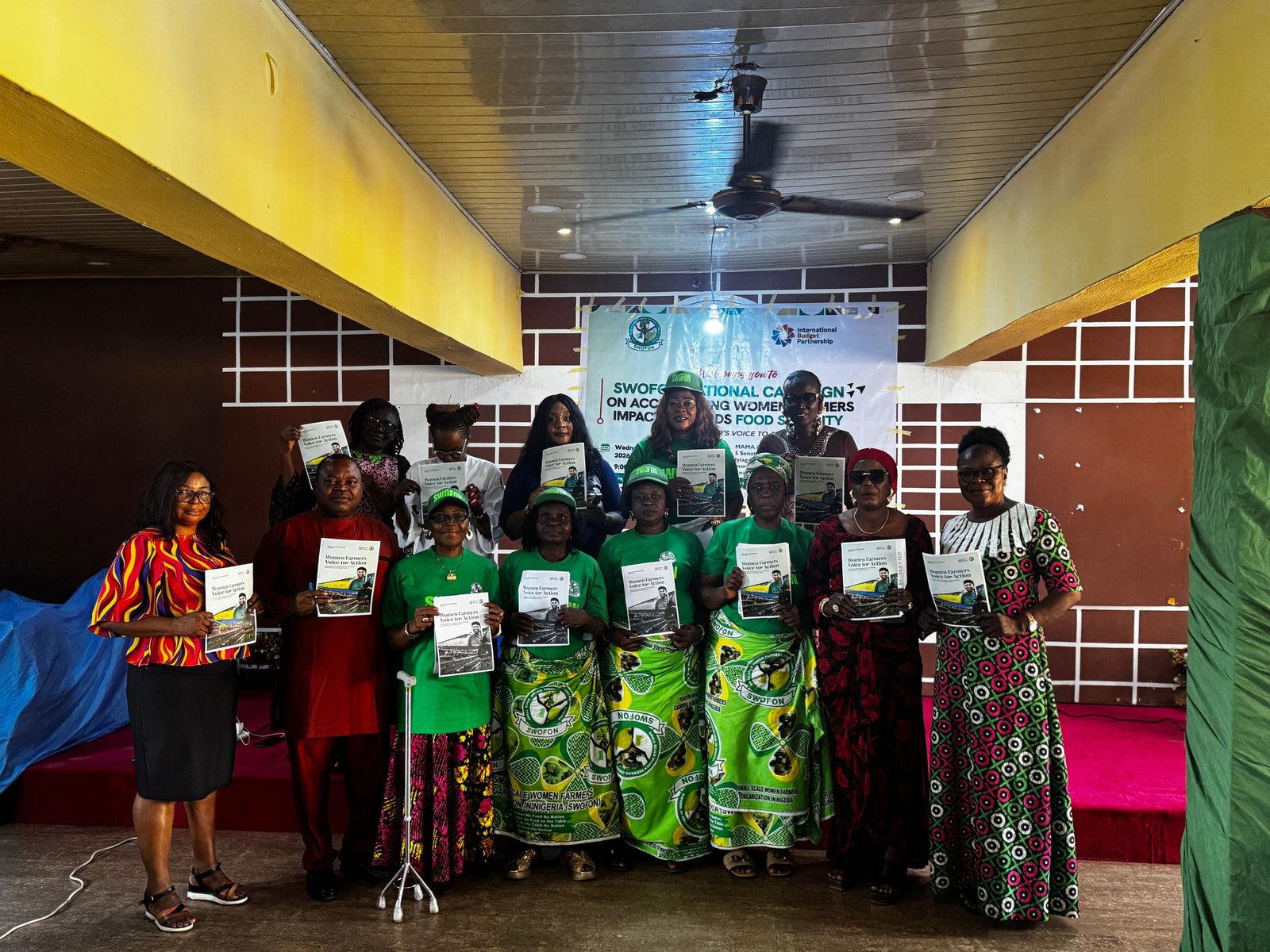
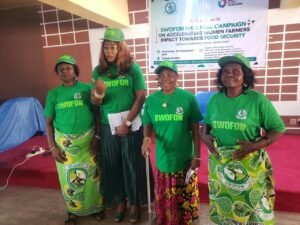
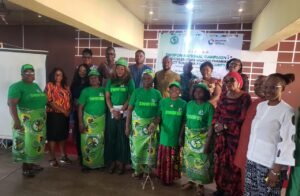
State Coordinator, Mrs Georgina Akunyiba stated this on Wednesday in Awka at the SWOFON’s National Campaign on Accelerating Women Farmers Impact towards Food Security Theme: “Women Farmers Voices to Action”
The campaign is aimed at amplifying the priorities of smallholder women farmers and securing concrete commitments from government and development partners on agricultural policy, budgeting and implementation.
Akunyiba also pledged the group’s commitment to ensuring that women’s priorities are reflected not only in consultations, but in budgets, programmes, implementation and results.
She however called for stronger and more accountable public investment in agriculture in the State, with particular attention on priorities of smallholder women farmers who contribute significantly to food production, rural livelihoods and local economic activity.
According to her, the call followed findings from the IBP–SWOFON Impact Assessment, 2019–2025, which examined SWOFON’s contribution to budget advocacy, access to productive resources, institutional strengthening and women farmer empowerment across five focal states, including Anambra.
“The assessment provides an important message for Anambra State: women farmers are increasingly participating in public budgeting and policy processes, but participation must now translate into identifiable budget commitments, implementation and tangible services at community level,” she said.
Underscoring the essence of the engagement, Akunyiba said stakeholders would present key findings and recommendations from SWOFON’s Policy Brief and amplify the voices and priorities of smallholder women farmers on agricultural policy, budgeting, and implementation.
“It is also to engage government and other key stakeholders to secure commitments towards adopting and implementing gender-responsive agricultural policies, adequate budgetary allocations, and improved delivery of resources and services to smallholder women farmers,” she said.
Country Director of the International Budget Partnership (IBP), Dr Yinka Babalola called for precise and timely releases of budget lines supporting small holder women farmers.
Babalola, represented by Programme Coordinator Lilian Ibe, described smallholder women farmers as backbone of Nigeria’s food system amidst growing challenges, calling on government to address them to ensure food security in the country.
“We are asking that budget lines supporting small holder women farmers be precise, releases be timely, not just budget approvals; that procurement happens, that execution happens, all the way through to the last mile.
“What often stands between a woman farmer and the resources meant for her is the inadequacy of systems that follow that money all the way to where she can access and utilize it. That is a solvable problem. We are asking you to help us solve it.
State Government representives pledged continued support for women farmers.
Among them include Commissioner for Agriculture, Dr. Ben Chuks Odoemena, represented by Head of Department, Ministry of Agriculture, Mrs Ifeoma Nwafor, Commissioner for Women Affairs, Mrs Esther Onyekesi, represented by Head of Department, Women Affairs, represented by Mrs Ifeoma Ezoka.
Others were Permanent Secretary, Ministry of Budget and Economic Planning, Mrs Chinyere Nwabachili, represented by Head of Department, Partnership Coordination, Mrs Obianamma Orji and Head of Agriculture and Natural Resources, Nnewi North, Mr Cajetan Ajanobi
The State Manager of the Small and Medium Enterprises Development Agency of Nigeria (SMEDAN), Mrs Chito Onuzulike, said the agency would sustain its partnership with SWOFON through agro-processing and women entrepreneurship initiatives under its Women in Self Employment Programme (WISE-P).
Chika Orji of the SWOFON National Secretariat, reinforced the organisation’s commitment to improving the livelihoods of smallholder women farmers across Nigeria.
The engagement featured launch of a policy brief, highlighting gender-responsive agricultural policies, increased budgetary allocations and improved access to resources for women farmers to strengthen food security.
About Author