
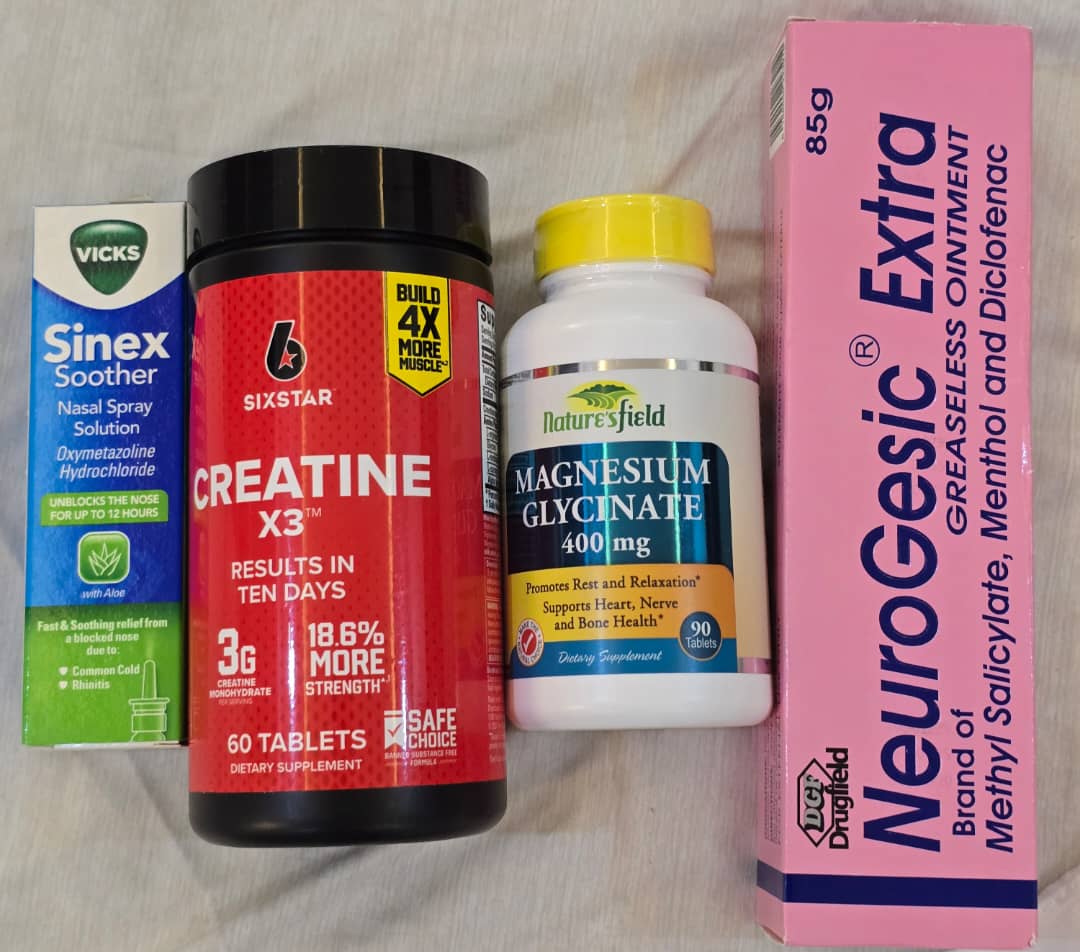
Today, I walked into a popular Abuja Supermarket and Pharmacy and bought four ordinary over-the-counter items: creatine, magnesium, Vicks Sinex and a pain relief ointment.
As I age and continue to exercise, I must ensure my body gets the proper nutrients and pain relief. Nothing exotic. No prescription. Just basic health maintenance.
Total bill in Nigeria: ₦130,520 — about $88.
 Out of curiosity, I checked what the same basket would cost elsewhere:
United States: ~$54
United Kingdom: ~$77
Egypt: ~$45
South Africa: ~$37
Nigeria was the most expensive.
But the real story isn’t the dollar price. It’s what that price means to the average worker. When you adjust for purchasing power (PPP), this same basket consumes: ~1% of an average monthly income in the US, ~2% in the UK, ~2% in South Africa, ~5% in Egypt
~15% in Nigeria
That’s the tragedy. In richer countries, OTC medicine is affordable to the average worker, including minimum-wage earners.
In Nigeria, it is a luxury choice against rent, food, and transport. A minimum-wage earner in Nigeria will need 2 months’ income to buy these medicines, while in South Africa, a minimum-wage earner will need 15% of a month’s pay.
This high cost of essentials reveals profound structural weaknesses:
Import dependence without scale,
FX pass-through without price controls,
Fragmented distribution (small importers, no bargaining power),
Weak local manufacturing of nutraceuticals
Combined, these weaknesses quietly punish people for trying to stay healthy.
When basic medicine costs this much relative to income, illness becomes a death sentence.
Health shouldn’t be a privilege of geography. But today, in Nigeria, it increasingly is.
We need local manufacturing urgently, but in the meantime, bulk public procurement can help provide scale and price control.
Osita Chidoka
17 January 2026
#ositainsights
About Author