

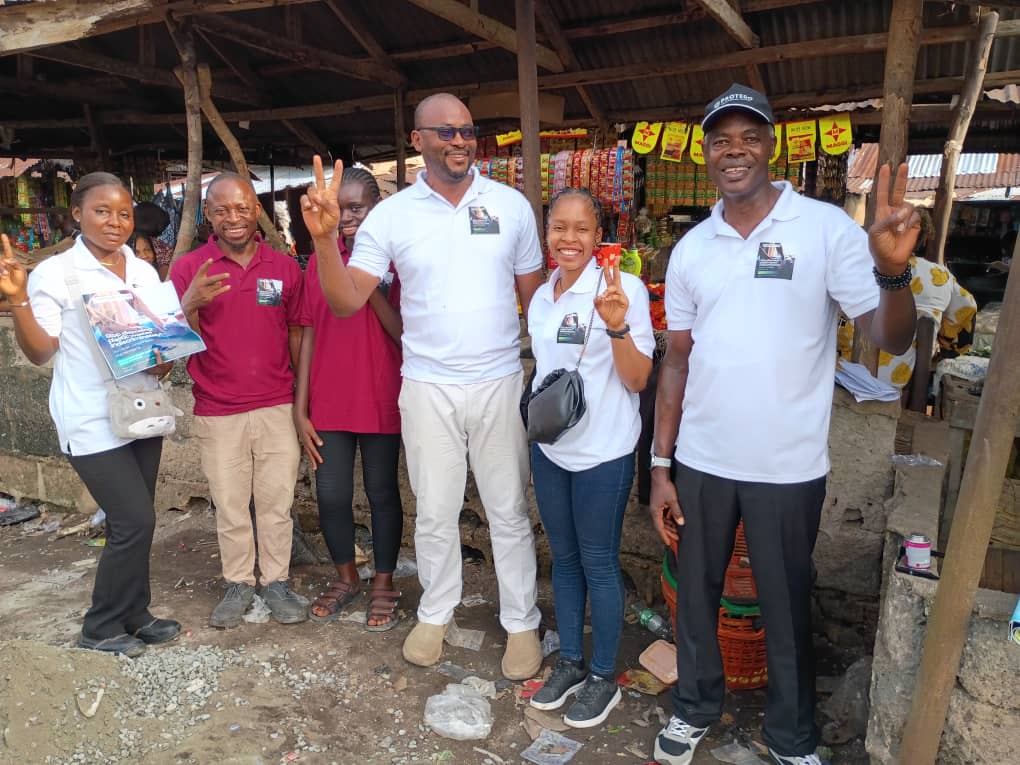
A new chapter in Nigeria’s environmental sustainability drive has opened in Cross River State as the PROTEGO (Prevention of Marine Litter in the Gulf of Guinea) project officially commenced operations in Calabar, with a clear mandate to clean up the Beach Market, Nsidung axis of the state capital and convert plastic waste into wealth while also restoring environmental sanity.
 The project, being implemented by Lumos Laboratories Nigeria Limited, is primarily focused on the conversion of plastic waste into interlocking tiles and construction bricks, alongside extensive sensitisation and training empowerment of youths and women within and beyond the host community. The initiative, it was gathered, is designed to address the growing challenge of plastic pollution (particularly its leakage into marine environments), while also creating economic opportunities for local residents.
Confirming the development to newsmen, the Founder of Lumos Laboratories and lead innovator on the project, Mr. Ejikeme Nwosu, explained that the decision to expand PROTEGO’s activities to Calabar was both strategic and urgent, given the city’s proximity to the coastline and the scale of plastic waste leakage into the marine environment from major markets such as Beach Market, Nsidung.
According to him, Calabar presents a critical hotspot where intervention can deliver immediate environmental impact while also empowering local communities. He noted that the project is not only about waste collection but about creating value from waste, restoring dignity to the environment, and building a sustainable system that benefits both people and nature.
Mr. Nwosu disclosed that a unique feature of the PROTEGO project in Calabar is its integrated approach to energy generation, stressing that a substantial portion of the clean energy required for the recycling process will be generated directly from biodegradable waste sourced from the same market environment. This, he said, will drastically reduce dependence on fossil fuels while addressing open defecation and indiscriminate waste disposal within the community.
He further explained that the project is expected to significantly reduce plastic waste leakage into the marine ecosystem, improve sanitation standards around the Beach Market axis, and create a replicable model that can be deployed in other coastal cities across Nigeria and the Gulf of Guinea region.
Mr. Nwosu added that PROTEGO is equally prioritising human capacity development, revealing that youths and women in the Nsidung-Calabar community will be sensitised and trained on plastic waste collection, processing, and conversion techniques. He noted that this approach is aimed at fostering community ownership of the project, creating sustainable livelihoods, and ensuring long-term behavioural change in waste management practices.
Concerning expectations, the Lumos Laboratories Founder stated that beyond environmental restoration, the Calabar project is designed to stimulate local micro-economies, reduce unemployment, and demonstrate that waste, when properly managed, can become a driver of economic growth rather than a public nuisance. He assured that strict quality, safety, and environmental standards would be adhered to throughout the project’s implementation.
PROTEGO (Prevention of Marine Litter in the Gulf of Guinea) is a multinational environmental initiative funded by the German Federal Ministry for the Environment, Climate Action, Nature Conservation and Nuclear Safety under its Grant Programme against Marine Litter. The project seeks to significantly reduce plastic pollution in marine environments in Nigeria and Ghana through innovative recycling solutions, strengthened policy frameworks, and increased public awareness.
The project is led by adelphi research gGmbH in collaboration with a consortium of local and international partners, integrating waste prevention, collection, recycling, and pilot innovations aimed at protecting marine ecosystems across West Africa.
This reporter gathered that the Calabar expansion builds on the earlier milestones recorded under the PROTEGO framework.
Recall that Lumos Laboratories has recorded several milestones in recent times, including being among the three winners of the highly competitive €40,000 PROTEGO Innovation Challenge, emerging from over one hundred entries, for its indigenous solution to convert plastic waste into interlocking tiles and bricks while training host communities.
Lumos Laboratories, founded by Mr. Nwosu, has consistently recorded remarkable feats in the field of environmental and clean energy innovation. The company also previously won the Hydrogen Innovation of the Year award at the Global African Hydrogen Summit in Windhoek, Namibia, outperforming firms from Namibia and the United States.
Beyond plastic recycling, the firm has also gained recognition for its groundbreaking work in converting human waste into hydrogen-rich gases for electricity generation, positioning it as a leading player in Africa’s clean energy and waste-to-wealth ecosystem. 


About Author