

Chinedum Treasure
The Development Centre for Orientation, Discovery and Empowerment (DeCODE) has called on the Anambra State Ministry of Women Affairs and Social Development to take the lead in developing and adopting a state policy on menstrual health and hygiene.
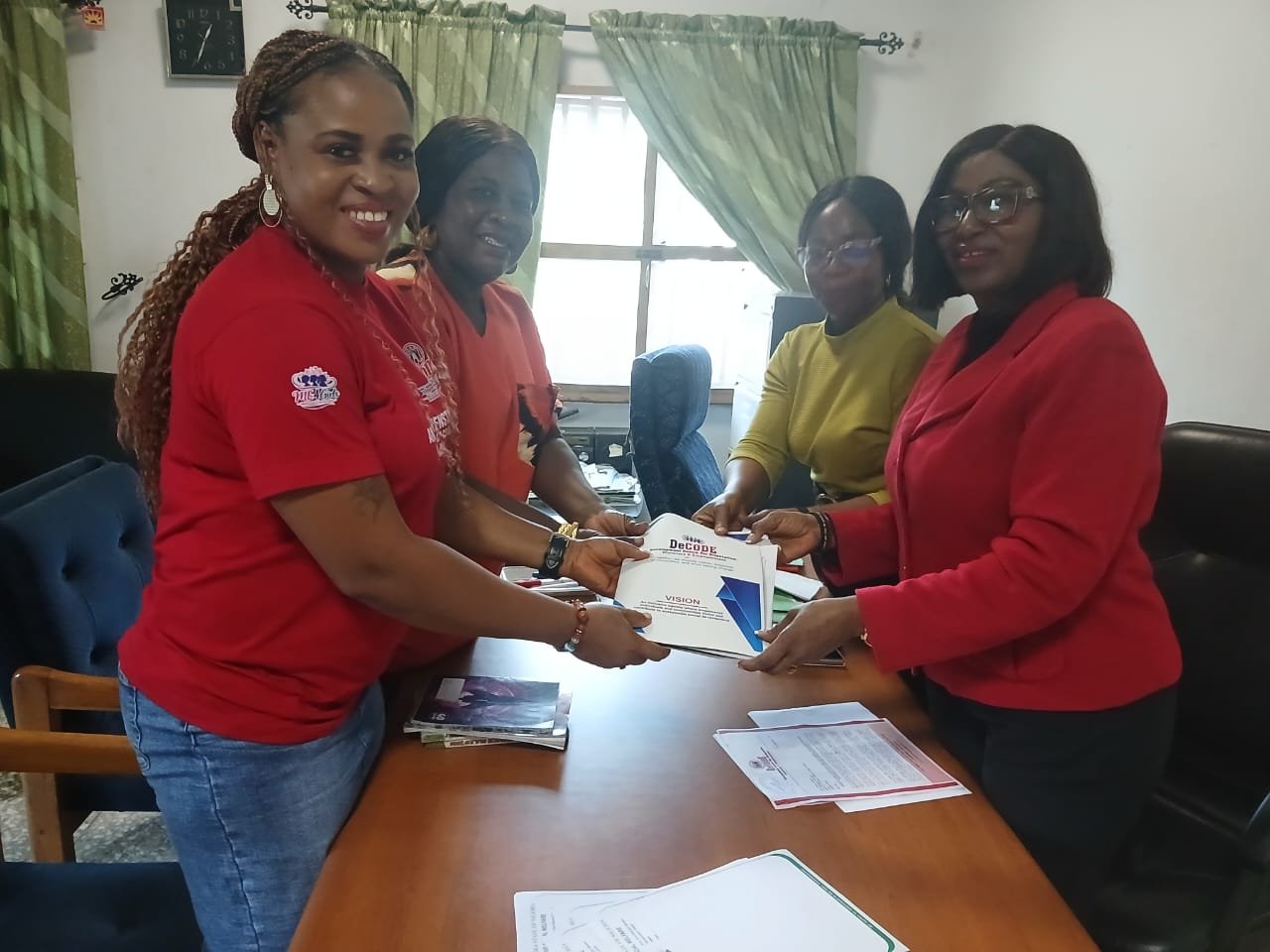
DeCODE made the call during a meeting with the Permanent Secretary of the ministry, Mrs Nkeiru Mokwe, in Awka, where it presented the progress of its Menstrual Ease for Girls (ME4Girls) Project.
The project is being implemented by DeCODE with support from Rise Up Together.
The Executive of DeCODE, Cynthia Enweonwu-Arinze, said the organisation had conducted a baseline assessment of menstrual hygiene management in Anambra State as part of the project.
She said the findings informed further consultations with civil society organisations working on menstrual health, leading to the formation of the Anambra Menstrual Health Advocacy Coalition.
According to her, relevant government ministries, departments and agencies were also involved in the process because menstrual health cuts across several sectors.
Enweonwu-Arinze said DeCODE had developed a draft menstrual health policy for the state and was presenting it to the Ministry of Women Affairs for review and input.
She urged the ministry to champion the adoption process while DeCODE provides technical and other necessary support.
Also speaking, the project consultant, Dr Rose Amasiani, said the Ministry of Women Affairs was best positioned to coordinate the policy because menstruation affects women and girls across different sectors and age groups.
She noted that while the issue has links with health, water, sanitation and hygiene, the ministry should coordinate the various MDAs with responsibilities relating to menstrual health.
Amasiani said the draft policy still required further inputs and validation before its adoption.
She said the project also seeks to improve awareness and give women and girls a stronger voice on issues surrounding menstruation.
“We have menstruating girls at home. We have women and people with special needs. Some of them do not understand menstruation. Most women don’t know enough about it,” she said.
Amasiani said greater awareness was therefore necessary to address misconceptions and improve menstrual health management.
Responding, the Permanent Secretary, Mrs Nkeiru Mokwe, welcomed the initiative and pledged the ministry’s cooperation.
Mokwe said improving women’s welfare remained important, adding that girls needed to be encouraged to understand that being a woman was not a disadvantage.
She said although she was only recently becoming acquainted with the initiative, the ministry would work with DeCODE to advance the project.
“Whatever it is that Ministry of Women Affairs should do as it concerns this project, we will do it,” Mokwe said.
The Permanent Secretary called for adequate notice of activities requiring the ministry’s participation to enable it to mobilise the necessary support.
She said menstrual health was an issue affecting virtually every woman, while older women could also contribute through their experience and advisory roles.
Mokwe assured the organisation that the ministry would work harmoniously with DeCODE and other stakeholders to achieve the objectives of the initiative.

About Author