

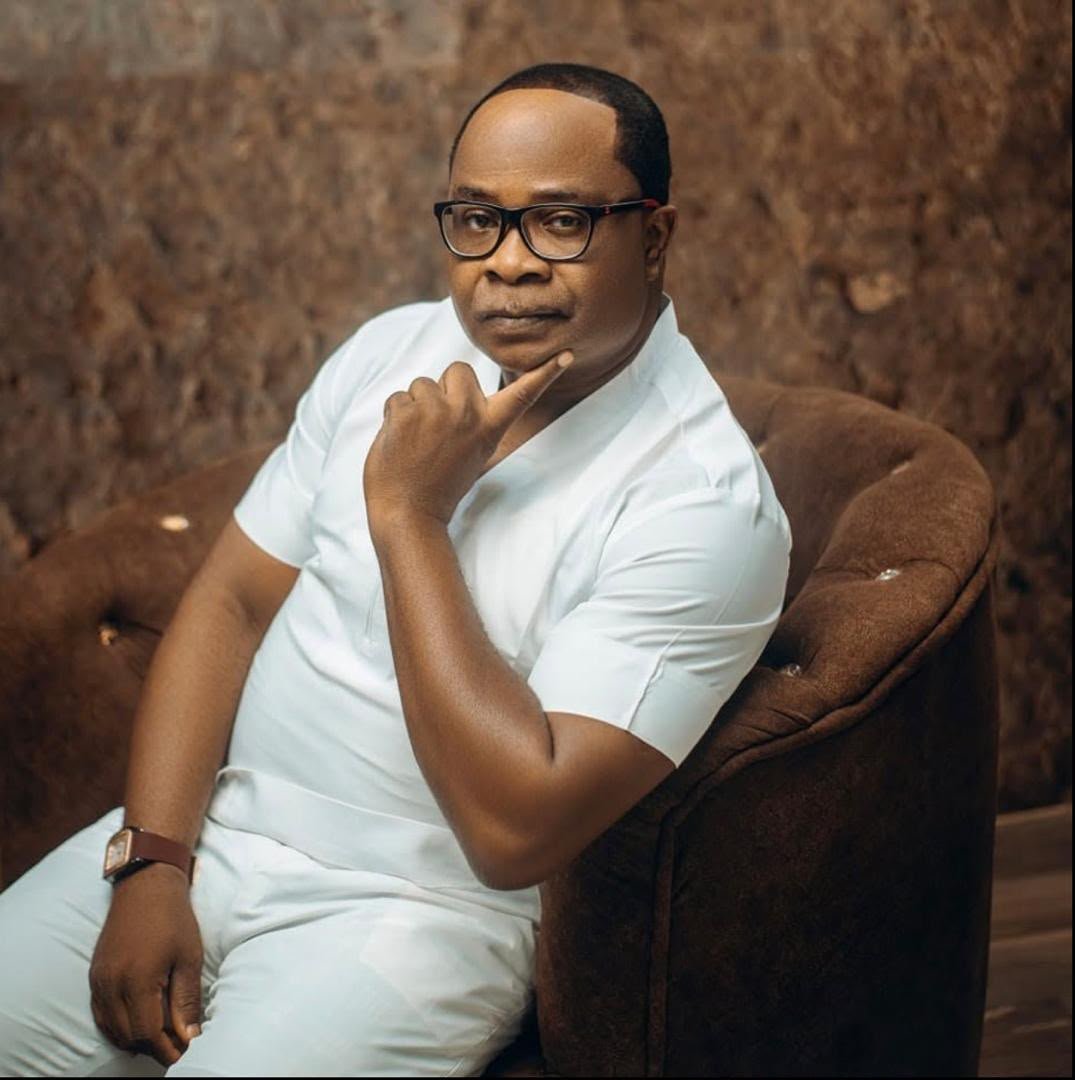
By Uzu Okagbue
There are writers who command words, and there are those rare souls who command something far more profound: the ability to make words awaken the human spirit, stir dormant thoughts, and give eloquent expression to feelings for which many have no language. James Eze, Odenigbo, belongs to this rarer tradition.
His is an intellect that does not merely write; it excavates. His poetry reaches beneath the surface of ordinary experiences, searching for the deeper truths concealed within them. There is a remarkable clarity to his thought, an uncommon richness to his imagination, and a depth to his creative expression that leaves one wondering not merely at the beauty of the finished work, but at the extraordinary inner world from which it emerges.
But I suspect that to understand Odenigbo’s poetry fully, one must look beyond the verses themselves and into the soul of the man who writes them.
For I do not believe his devotion to poetry is simply a pursuit of recognition, a quest for literary distinction, or an attempt to win prizes and earn a living. Those may be incidental rewards, but I dare say they are not the wellspring of his calling. Some people write because they have something to say; others write because something within them will not permit them to remain silent. The latter are often responding to a deeper summons: to preserve the beauty of thought, to interrogate the mysteries of existence, to give meaning to the human experience, and to leave behind something that makes the world a little more conscious of itself.
I suspect this is where Odenigbo’s poetry finds its deepest purpose.
It is a wonderful thing for one’s work to be acknowledged. It is an even greater privilege for that work to travel beyond its creator, enter the lives of others, touch places the writer may never see, and awaken emotions the writer may never personally witness. But perhaps the highest fulfilment of any creative calling is to discover that what began as a private conversation between the soul and its imagination has become a source of meaning, consolation, illumination, and joy to other people.
That is when art transcends achievement and becomes service to humanity.
And this, to me, is the significance of what Odenigbo’s poetry has attained; and what I believe it is destined to accomplish far beyond its present reach.
Having excelled in the demanding world of Journalism, banking and distinguished himself even further in public service, James has already demonstrated that he possesses the discipline, intellect, and capacity to succeed in the conventional arenas by which society measures achievement. It is, therefore, understandable that friends and admirers might wonder why a man who has accomplished so much would devote himself with such extraordinary seriousness to poetry at this stage of his life.
I dare say that the answer is becoming clearer.
Perhaps there comes a point in a man’s journey when success, having answered many of life’s material questions, gives way to a more profound inquiry: What is the meaning of all I have lived? What remains to be said? What can I give that money cannot purchase, position cannot confer, and public service alone may not fully express? Perhaps poetry is Odenigbo’s answer.
Perhaps, after years of engaging the institutions of society, he has turned with renewed attention to the institution that matters most: the human soul. Perhaps he has come to understand that while public service can transform communities and leadership can alter the course of events, words, when fashioned with truth and beauty, can travel across generations, survive the departure of their author, and continue to speak long after the applause has faded.
And perhaps this is why his commitment to poetry feels so much larger than a hobby or a late-discovered passion. It carries the promise of a man seeking to convert the wealth of his experiences, the discipline of his intellect, and the wisdom of his encounters with life into something enduring.
If this is indeed the purpose unfolding before us, then we are witnessing more than the flowering of a poet. We are witnessing the maturation of a calling.
My dear James, the world may applaud what a man achieves, but it is what he gives of himself that ultimately defines his legacy. Your poetry is increasingly becoming a meeting point between the life you have lived, the truths you have gathered, and the lives your words will yet touch. That is a gift worth celebrating: not only for what it says about your talent, but for what it reveals about the possibilities still resident within a human being.
And if there is one thing I hope you will carry with you from this moment, it is this: never measure the worth of your calling solely by the prizes it wins, the recognition it attracts, or the applause it commands. Measure it also by the minds it opens, the hearts it reaches, the truths it preserves, and the generations it helps to see life differently.
For the finest reward of a writer is not simply to be remembered as one who wrote beautifully, but to know that, through his words, other people discovered something beautiful, truthful, or meaningful about themselves and the world.
Congratulations, Onye m, James Eze, Odenigbo, Mmiliukwu.
May this recognition deepen your humility, strengthen your resolve, and remind you that the journey of a true calling is never exhausted by its first triumphs. There is still so much to say, so much to reveal, and so many lives your words have yet to touch.
And I dare say, with the greatest affection and conviction, that what we are witnessing today may one day be remembered as merely the opening chapter of something far more enduring.
You have not arrived at the end of your journey, my brother. You have only begun to discover the full measure of why you were given this gift.
Keep writing, Mmiliukwu. The world has heard your voice. May your words now travel farther than your name, touch deeper than your reputation, and outlive the moment in which they were written.
Your best work is not behind you. It is still waiting to be born.
About Author