

By Ebuka Onyekwelu, PhD
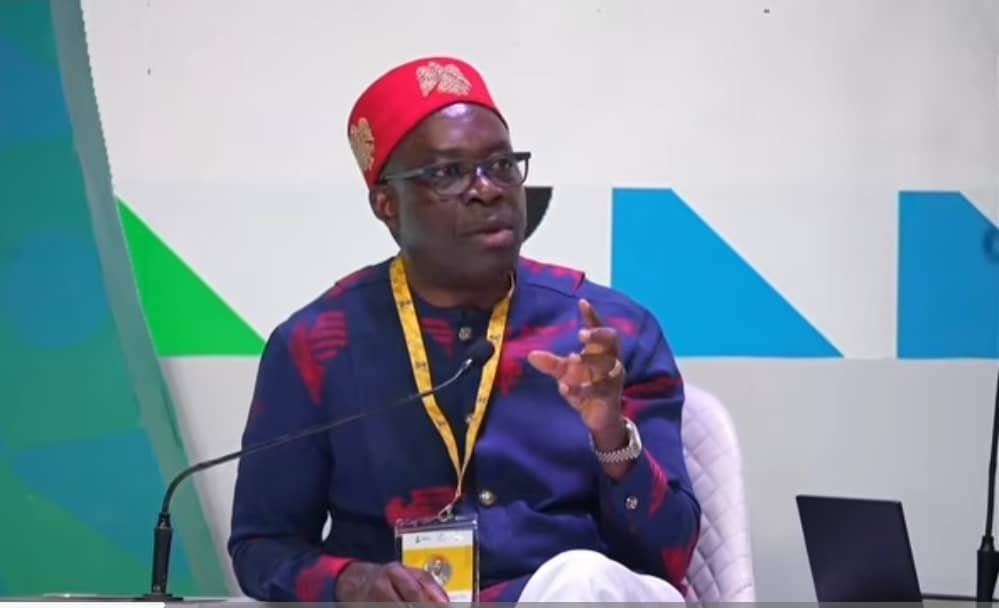
The Governor of Anambra State, Professor Charles Chukwuma Soludo, CFR, has called for collective ownership as a matter of patriotic duty by Nigerians to move their country forward. He also called for collaboration at all levels of government to strengthen sustainability in the governance agenda over time. Speaking at the 32nd Nigeria Economic Summit on Monday in Abuja, on the theme: “Growth that works: Building a new economic accord for Nigeria,” Professor Soludo said the conversation must now be taken beyond policy statements.
During a panel discussion, Professor Soludo, joined by Professor Stefan Dercon of the Blavatnik School of Government at the University of Oxford, Nigeria’s Minister for Finance and the Coordinating Minister of the Economy, Mr. Taiwo Oyedele, Mr. Omoboyede Olusanya and Chema Triki, challenged Nigerians on what he called the “citizens’ compact.” Speaking, Soludo noted that “We are all responsible.” This, he argued, is because what we do as individuals matters to the overall economy of Nigeria. He also made a strong case for the use of locally made products, rather than foreign ones, using his Akwete “daily uniform” to make a case that if Nigerians wear Nigerian fabrics, then not only is the economy boosted, but in that sector alone, as much as 10 million jobs can be created in a year.
Commenting on Nigeria’s macroeconomic stability, Governor Soludo said that “there is a global consensus” that Nigeria is on the right path. According to Soludo, the current administration has delivered the best macroeconomic stability in decades. He also suggested maintaining it for at least the next decade. However, he cautioned against what he called “money illusion.”
As part of the long-term economic stability projections for Nigeria, Anambra State Governor Professor Charles Chukwuma Soludo also called for more collaboration between the Federal Government and the sub-nationals. “There must be collaboration and coordination between the Federal Government and federating units,” Professor Soludo said, calling for “allocative efficacy” and “sectoral coordination.”
About Author