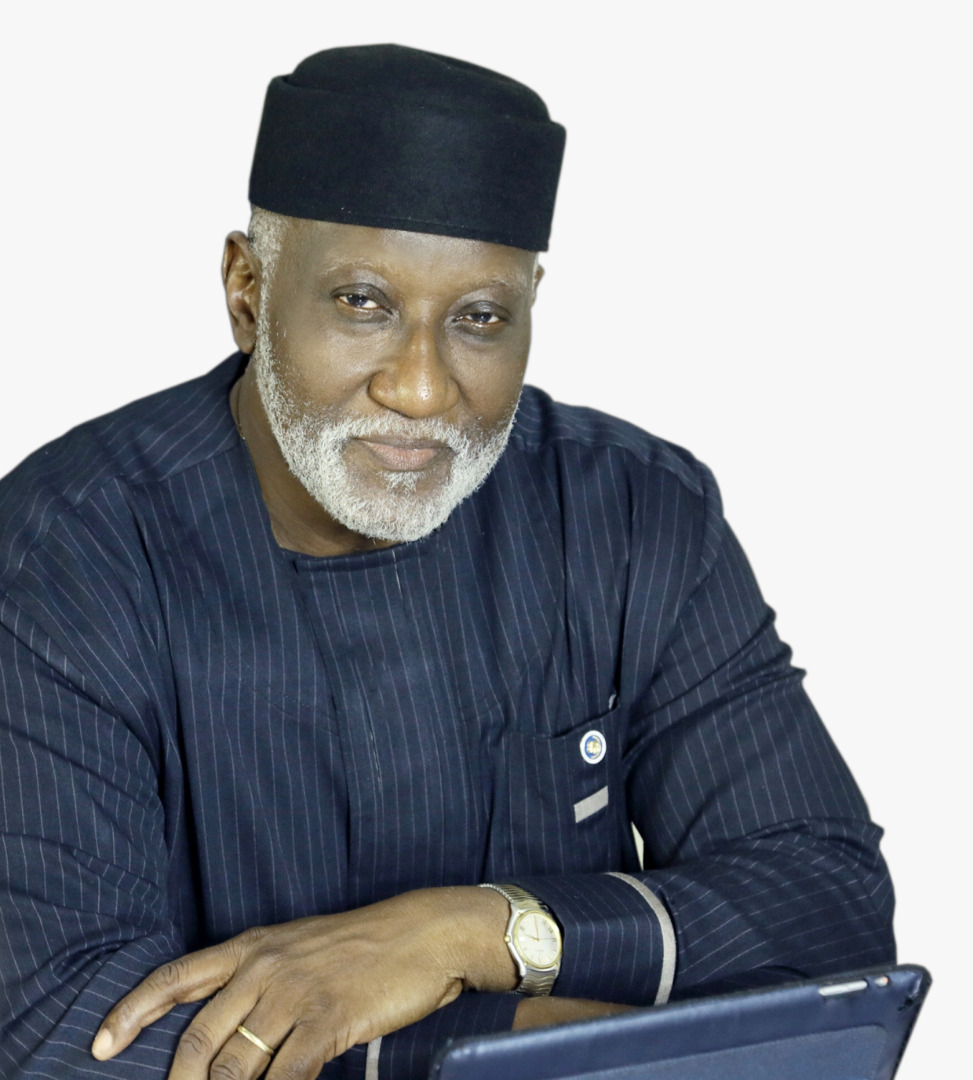

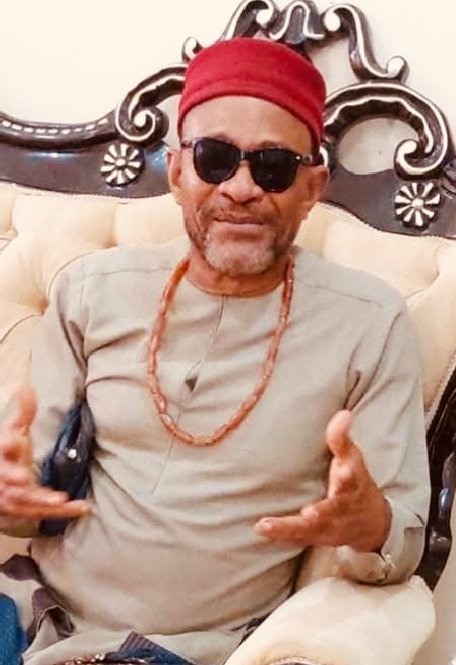
A former member of the Anambra State House of Assembly who represented Njikoka II Constituency, Hon. George Okoye, has alleged that the Labour Party’s 2023 presidential candidate, Peter Obi, weakened opposition politics in Nigeria through his movement from the ADC coalition to the NDC alliance.
Speaking with our reporter, Okoye claimed that Obi’s political decisions fragmented the opposition and created deep divisions among opposition leaders.
“He has scattered the opposition in Nigeria through divide-and-rule tactics,” Okoye said.
According to him, Obi’s chances of becoming President of Nigeria are now “almost impossible,” stressing that the opposition would have stood a better chance if it had remained united.
“The Tower of Babel they were building has collapsed, and the architects are now speaking different languages,” he stated.
 Okoye argued that Obi is no longer in a strong position to contest effectively in future elections because the opposition bloc has become deeply fractured.
“He has divided the opposition. There are four major figures in the opposition , Rotimi Amaechi, Atiku Abubakar, Rabiu Kwankwaso, and Peter Obi,” he said.
He further claimed that another internal crisis was already looming within the ADC coalition.
“Rotimi Amaechi has insisted that the presidency must be zoned to the South. If that does not happen, he may leave the ADC. That means the so-called Tower of Babel has already fallen. They are scattered and speaking in different political directions,” he added.
Okoye also argued that Obi underestimated the political strength of the ruling establishment.
“Obi does not understand that he is dealing with a political structure that controls 32 governors, and with Anambra included, that makes 33,” he claimed.
Questioning the grassroots strength of emerging opposition parties, he asked:
“Do these new parties even have one councillor? Who will protect their votes during elections?”
Referring to the 2023 presidential election, Okoye maintained that Obi won substantial support across the country but lacked the political machinery needed to secure and defend electoral results.
“It comes down to what happened to Peter Obi in 2023. He won in many places, but the Labour Party did not have enough people on the ground to protect the votes,” he said.
He referenced comments previously made by actor-turned-politician Kenneth Okonkwo, claiming that Obi failed to consolidate his electoral gains.
“Kenneth Okonkwo said they delivered votes to him, but those votes were not adequately protected. That is the challenge facing the opposition today,” he added.
Okoye acknowledged Obi’s popularity among ordinary Nigerians but insisted that popularity alone does not guarantee political victory.
“There is a common belief that wherever Peter Obi goes, people will follow him. Yes, that reflects political appeal and emotional connection, but politics is not driven by emotion alone. Politics is about strategy, structure, and loyal political operatives,” he said.
He questioned Obi’s political network, especially within Anambra State.
“Who are Peter Obi’s political foot soldiers? Even in his home state of Anambra, where are his established political structures? He often moves around politically on his own and appears more interested in international engagements,” Okoye alleged.
He further accused Obi of prioritising business interests over political consolidation, although he provided no evidence to support the claim.
“During the last election, he reportedly attracted significant international donations and goodwill. He is a businessman, and many people believe he understands how to convert political popularity into influence,” he said.
Okoye argued that political survival in Nigeria depends heavily on entrenched structures and loyal allies.
“There are two ways to win elections: winning the hearts of the people and winning on the ballot paper,” .
“Who are the people that will defend his mandate when results are being altered? Who will resist manipulation at the collation centres? That is the issue Kenneth Okonkwo raised, but many people do not understand it.”he said.
He also criticised Obi’s political style, saying the former governor had historically avoided internal political battles.
“He started his political career by promoting himself even before fully establishing party structures. That is why Nyesom Wike once described him as a ‘bread-and-butter politician’ ,someone who wants political rewards without enduring the difficult process of party building,” he added.
Okoye advised Obi to focus on consolidating influence within his regional base before pursuing national ambitions.
“I advised him to first secure and strengthen his home base because that gives a politician negotiating power. Right now, he does not even control a strong political base,” he added.
Despite acknowledging Obi’s mass appeal, Okoye maintained that emotional support alone cannot replace political organisation.
“In politics, passion is different from practical politics. The head is stronger than the heart,” he said.
Using a football analogy, he added:
“There are two ways to move a team — either as the coach or as the captain. The coach is the strategist. In this political equation, the South-East may see itself as the coach, while the South-West is providing the captain.”
About Author