

Chinedum Treasure
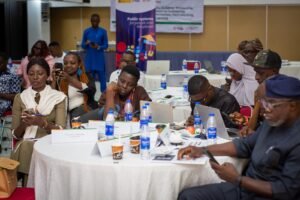
A total of 35 media professionals and members of Civil Society Organizations are undergoing a three-day training on strengthening capacities for democratic and peaceful elections by Fundación para la Internacionalización de las Administraciones Públicas (FIAP), through its implementing frontline partner FactCheckAfrica.
The participants were drawn from Nigeria’s South-West and South-East geopolitical zones, including journalists, fact-checkers, civic actors, researchers, media development practitioners and civil society representatives working at intersection of information integrity, democratic accountability and electoral peace building.
The regional capacity-building Lagos workshop under the EU Support to ECOWAS in Peace, Security and Governance (EPSG) Project, Lagos is titled “Truth at the Ballot: Strengthening Media and Civil Society for Democratic and Peaceful Elections in Nigeria”
 Declaring the workshop open on Monday, Technical Advisor on Media and CSO, FIAP-EPSG Project, Joseph Osuigwe said the workshop is aimed at strengthening the role of journalists, fact-checkers, and civil society organisations in promoting democratic and peaceful elections in Nigeria.
According to him, the training focuses on strengthening participants’ capacity to respond to electoral misinformation, hate speech, coordinated online manipulation and emerging artificial intelligence-related risks ahead of Nigeria’s upcoming electoral contests, including the Ekiti and Osun governorship elections, as well as the 2027 general elections.
“Over the course of the workshop, participants will engage in practical sessions on pre-electoral context analysis, verification and fact-checking, open-source intelligence (OSINT), digital investigations, hate speech and narrative analysis.
“Other sections are gender-sensitive and youth-inclusive reporting, investigative journalism and democratic accountability, and safe journalism practices during elections.
“The workshop also incorporates hands-on simulations, verification exercises, scenario-based group work, and action-planning sessions designed to support participants in translating learning into concrete organisational and community-level interventions.
“Beyond strengthening technical skills, the workshop provides a platform for collaboration and peer learning among media and civil society actors committed to safeguarding democratic processes, strengthening public trust in information, and promoting peaceful civic participation.”
Speaking on the significance of the initiative, Founder of FactCheckAfrica, Abideen Olasupo noted that the increasing sophistication of misinformation campaigns, coordinated influence operations, and online hate speech requires stronger collaboration between journalists, fact-checkers, and civil society organisations.
Olasupo, represented by Researcher and Fact Checker, Mustapha Lawal said the workshop forms part of a broader effort to build resilient information ecosystems capable of supporting peaceful and credible elections.
“As Nigeria moves closer to key electoral milestones, including the Ekiti and Osun governorship elections and the 2027 general elections, strengthening the capacity of journalists and civil society actors to identify, verify and counter harmful information has become more important than ever.
“Through this initiative, we are supporting a network of professionals who can promote evidence-based public discourse, strengthen democratic accountability, and contribute to peaceful elections,” he added.
Among the resource persons at the training were Tonye Bakare, AFP Nigeria Correspondent (Lagos) and Researcher & FactChecker, FactCheckAfrica, Mustapha Lawal
While Bakare spoke on Pre-electoral Context Analysis Mapping the Nigerian disinformation landscape ahead of 2027: trends, actors, and implications for women and young people, Lawal delivered paper on Verification & Fact-checking Practical tools and workflows: reverse image search, OSINT techniques, and AI-assisted verification applied to electoral content.
There was also group work on Verification Lab Participants work in small groups to analyse real electoral information case studies using verification workflows, reverse image search, source authentication, and OSINT tools.



About Author