

By Ebuka Onyekwelu, Ph.D
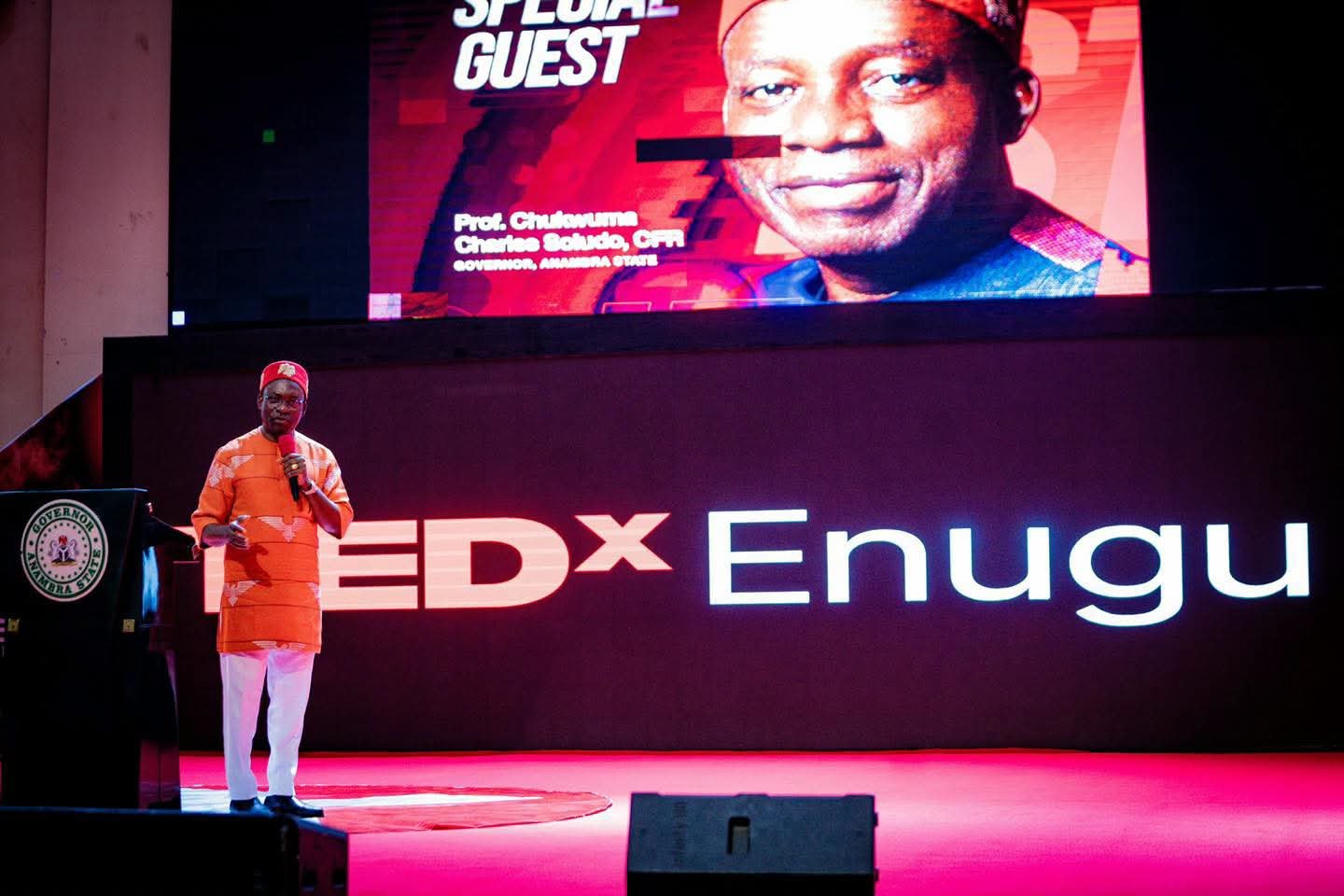
Last weekend during Governor Soludo’s outing at the TEDx Enugu, he offered important counsel to Ndi Igbo: “Let’s tone down the noise,” Professor Soludo admonished. Many people seem to have missed this simple yet crucial part of that excellent outing by the governor. It, however, remains a hard-to-ignore takeaway from that outing. Weighed against the prism of politics, the essence of the message would be missed. But on its merits, it is a home truth that requires constant reminder. To begin, not many people like to hear the truth even if they demand to be told one. Yet, Soludo’s home truth is something Ndi Igbo must now take home and bring closer to heart.
About 43 years ago, Professor Chinua Achebe offered the same counsel to Ndi Igbo in his memoir “The Trouble with Nigeria.” While admitting that success can attract envy, Achebe recognized that it is worse when the success “obsess the mind…and dispose it to all kinds of crude showiness.” Apparently convinced that the counsel needed emphasis, Achebe then observed that “There is no doubt that there is a strand in contemporary Igbo behavior which can offend by its noisy exhibitionism and disregard for humility and quietness.” Sadly, this looks like a description straight out of the brazen exhibitionism in 2026 by some Ndi Igbo “who have made it,” in the words of Achebe. A troubling behavior that has endured for over four decades is a disturbing problem that should be on the front burner of any honest conversation about the Southeast. Unfortunately, it is not the focus of conversations within the Southeast because of political correctness, given the sensitivity of the conversation and how it could so easily be misinterpreted to fit various political interpretations. The luck, this time, is that Professor Soludo is not exactly the go-to politician for political correctness, while pretending to be having an honest conversation on the Southeast.
For a long time, there are so many issues that have been altogether avoided, played down, or simply blamed on Nigeria. Over time, many Southeast politicians have found a way around most of these hard conversations that should elicit home truth, while placing a demand on accountability and responsibility from Ndi Igbo. However, not much has been heard of that. The focus is always on marginalization, ethnic politics in Nigeria, and how the Nigerian State is designed to be unfair to Ndi Igbo. While these are equally legitimate concerns that demand interrogation, why is it completely inconvenient to decry the needless noise from Ndi Igbo all over the place? Why must comments like “money na water” still be associated with onye Igbo in 2026? In a world naturally divided by many differences, are there honestly no consequences for such noisy exhibitionism? This is why Governor Soludo’s call for Ndi Igbo to tune down the noise is even more important today than it was 43 years ago.
The call by Governor Soludo for Ndi Igbo to begin to deliberately de-emphasize individual success and begin to build community-based, structured, and enduring success is a realm of success that can only be attained without noise, because it is selfless. Soludo’s message is simple: Ndi Igbo have done well as individuals, but are distracted. Significantly, Governor Soludo’s call highlights that there is more for Ndi Igbo to do for Ala Igbo beyond their individual success, and so to have an honest Igbo conversation and miss these crucial landmarks points to nothing but a rehearsed and heavily measured speech designed for feel-good purposes.
Soludo’s message carries the weight of the aspiration of Ndi Igbo in Nigeria and elsewhere. For Ndi Igbo to matter in today’s Nigeria and in the world at large, they must be tactful, not boastful. They must synergize, and they must move without noise. No human civilization survives around an individual. Ndi Igbo must build quietly, and most importantly, must take personal or group responsibility for actions that tend to expose them to needless scrutiny and bad blood, and manage the same. This message must never be lost on today’s Ndi Igbo.
About Author