

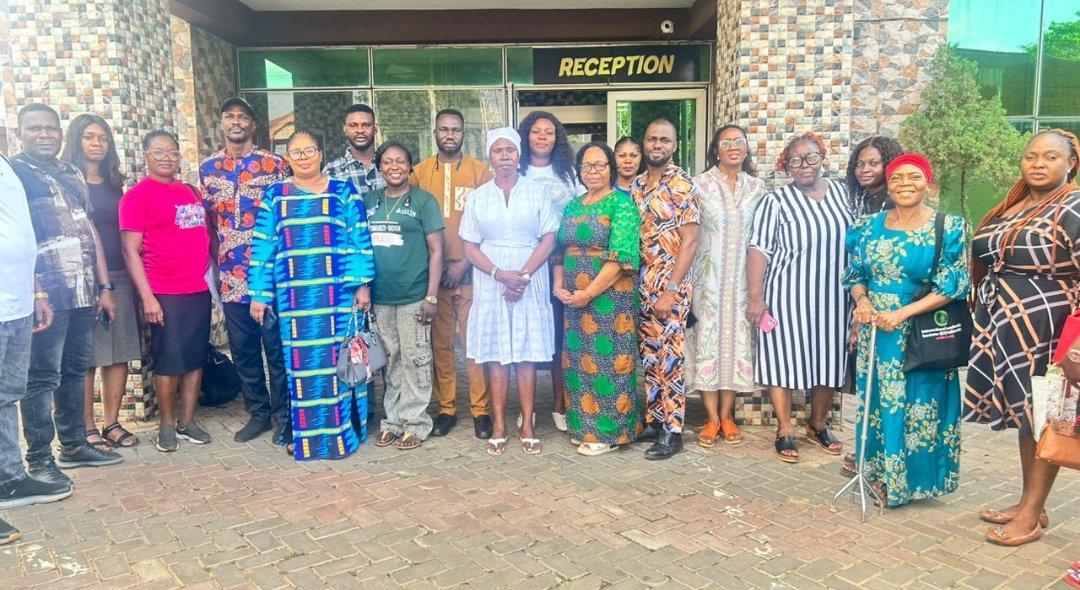
Chinedum Treasure
The Association for Eradication of Tuberculosis (TB Network) Anambra State has called for the extension of the National/State Health Insurance program to the vulnerable citizens, particularly the poor.
State Coordinator, Ify Unachukwu who made the call in Awka during the group’s Quarterly Integrated CLM State Press Briefing argued that the poor, often less educated and unemployed scarcely pay out of pocket for the high costs associated with accessing healthcare services.
She also expressed worry over cases of misappropriation or mismanagement of
primary healthcare funding, insisting the funding should be devoid of such anomaly to enable robust public health program at all levels.
According to her, for Nigeria to progress in addressing HIV, TB, Malaria, and GBV-related issues, there’s a need to implement measures that include prevention and treatment, health education and promotion and community partnership.
 She said, “We call on government, development partners, the private sector, community leaders, and citizens to extend the National/State Health Insurance program enjoyed by the formal sector to other vulnerable citizens, particularly the poor.
“The poor often are less educated and unemployed and cannot pay out of pocket for the high costs associated with accessing healthcare services.
“Funding of primary healthcare should be devoid of misappropriation or mismanagement to enable a robust public health program at all levels.”
Underscoring the need to prioritize health education and engagement, Unachukwu called for the empowerment of communities to embrace positive behavior change towards achieving success in malaria, HIV, and TB responses in Nigeria.
“In this vein, every ward should commit to health promotion and education programs to increase awareness of disease prevention and promote community participation in healthcare,” she added.
The TB Network boss further stressed the importance of highlighting the TB commodities and drugs stock-outs with unavailability of recording and reporting tools in facilities, just as she called for quick interventions targeted at addressing the gaps as well as offer lasting solutions.
“We call on the critical stakeholders at the helm of affairs at the Ministry of Health, Ministry of Budget and Economic Planning, and the Ministry of Finance to urgently address these gaps and provide lasting solutions to events such as this by allocating and releasing funds for procurement and distribution of TB Drugs, R and R tools to avoid undue exposure to TB infection and risk of multidrug-resistant TB, and Data loss from the facilities.
“There’s need to commit adequate resources for the full and effective implementation of all planned interventions, including involvement of the private sector and community participatory approaches through advocacy and partnerships.
“Community members should actively support and advocate for their PHCs as community involvement is crucial in ensuring the sustainability and effectiveness of these centres; community support can manifest through volunteering, donating resources, or participating in advocacy efforts to secure increased funding and resources for PHCs,” she said.
Unachukwu who further stressed the need to highlight the importance of Domestic Resource Support, called for the commencement of well-structured communication by the Government, private sectors, and communities, with Individuals to enable better HIV/AIDs, TB, and Malaria response in the state.
She enumerated some key achievements recorded in the State to include transformation of unsanitary environment, improved access, awareness and affordable healthcare services as well as restoration of electricity and water supply in communities, enrollment of over 56 community members into ASHIA-BHCPF programme, among others.
On Gender-Based Violence and Gender and Human Rights Issues, the TB Network boss identified domestic, verbal, and physical abuse, rape, sexual assault, early and forced marriages, incest, female genital mutilation, acid baths, and outright killing as various forms of gender-based violence in Nigeria.
She regretted that women, men, boys and girls continue to suffer all forms of degradation and deprivation in public and private spaces.
“Civil Society for the Eradication of Tuberculosis in Nigeria is calling on all stakeholders to fight against cases of gender-based violence and urging all citizens to stop the perpetrators.
“Let us not be silent. Let us pull our efforts together to rid this nation of this menace of gender-based violence…If you see something, please say something.”
“There is an urgent need to strengthen health systems and provide the necessary financial resources, with renewed political will to foster favorable collaboration.
“Evidence-based and cost-effective interventions such as the Integrated Community-Led Monitoring need to be scaled up to include community-based service delivery models with a focus on people-oriented care,” she added.
About Author