

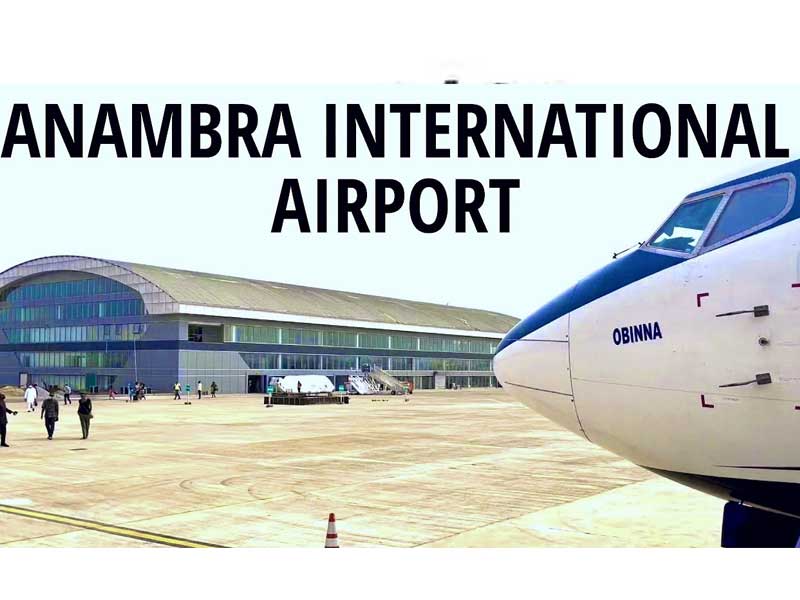
The second Vice President of Aviation Safety Roundtable Initiative (ASRTI), Dr Alex Nwuba, has defended Anambra state’s plan to build a second airport.
Nwuba, in an interview said the project was an economically driven logistics hub, rather than a prestige infrastructure that could become a white elephant project.
Reacting to criticisms trailing the proposed airport, Nwuba said the project should not be assessed using the same criteria as several underperforming state-owned airports, insisting that Anambra’s aviation strategy is rooted in the state’s industrial and commercial aspirations.
According to him, the challenges faced by the state’s first airport stemmed largely from its location rather than poor administration.
He explained that aviation is heavily influenced by geography, stressing that airlines naturally gravitate towards airports that offer stronger commercial viability, larger passenger catchment areas and greater operational efficiency.
The ASRTI executive noted that the location of Delta State’s airport has enabled it to attract traffic that would otherwise have passed through Anambra’s first airport, describing the development as a structural disadvantage rather than a policy failure.
He said the proposed second airport was conceived to address those shortcomings by serving primarily as a cargo-driven aviation hub integrated with manufacturing and industrial activities.
He said: “Airlines are profit driven and when an airport’s geography does not align with commercial routes, passenger catchment or operational efficiency, carriers simply avoid it. That is exactly what happened.
“Delta’s airport is better positioned and more attractive for airlines, naturally scooping the passenger traffic that should have been flowing through Anambra’s facility. The result was not administrative failure but a structural mismatch that no amount of marketing or subsidy could correct.”
Nwuba explained that the new airport would provide critical support for manufacturers, exporters and logistics companies by facilitating the efficient movement of goods, thereby creating sustainable revenue streams beyond passenger traffic.
According to him, airports become financially viable when they are integrated into wider economic networks, instead of being developed solely as passenger terminals.
He maintained that while passenger traffic remained important, modern airport viability was increasingly determined by cargo volumes, operational efficiency and low operating costs.
Nwuba added that a cargo-focused airport linked to industrial activities would stimulate regional economic development, attract investment and strengthen Anambra’s competitiveness as a manufacturing and distribution centre.
Nwuba, however, agreed that several state-owned airports have poor performance, but declared that those examples were largely projects that lacked clear economic foundations.
He insisted that the proposed Anambra airport was deliberately designed to avoid those pitfalls through strategic location, cargo operations and integration with the state’s industrial development plans.
According to him, lessons from the first airport had reinforced the need for aviation infrastructure to be both strategically located and closely aligned with broader economic objectives.
About Author