
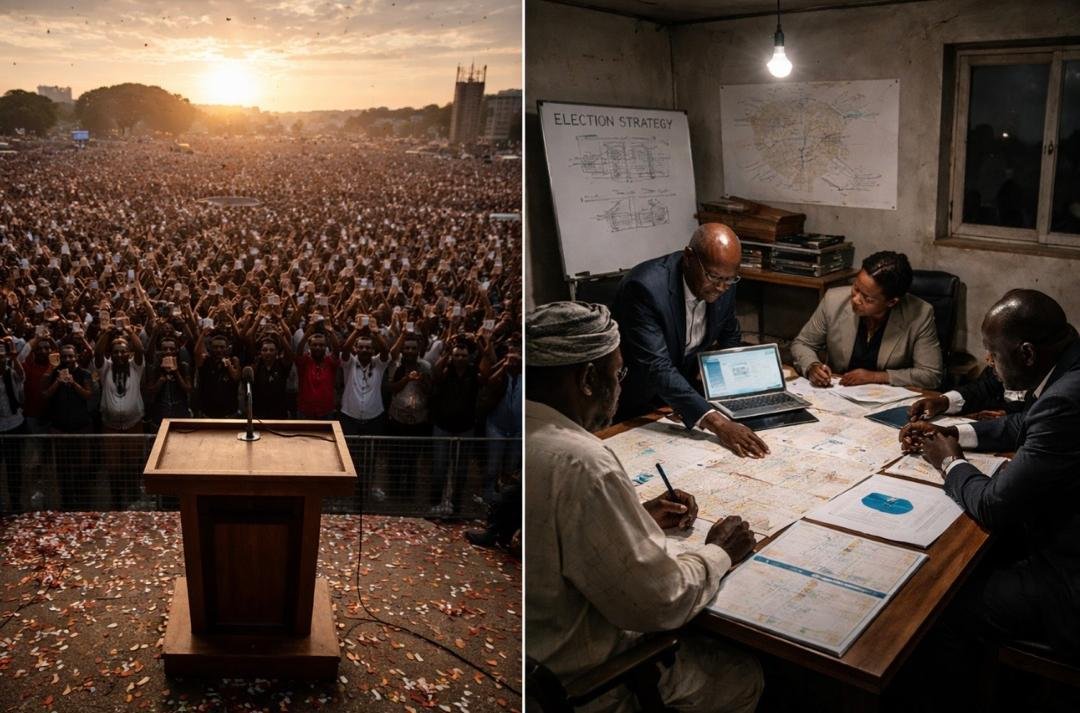
It is important; without sentiment, without prejudice, to separate political reality from political theatre. Elections are not won on the currency of excitement; they are secured through structure, discipline, and the quiet mathematics of influence.
Public adulation, however loud, is a poor substitute for organised political capital. Crowds gather for many reasons; emotion, symbolism, momentary hope: but ballots are delivered by networks that have been painstakingly built, negotiated, and sustained over time. If popularity alone translated to victory, global icons of entertainment and faith would effortlessly convert their followership into electoral dominance. They do not, because politics is not applause; it is architecture.
What often passes for strategy in some quarters is, in truth, an overinvestment in optics: a carefully cultivated image of moral purity, a dove-like persona that seeks to rise above the fray as though politics were a sanctuary rather than a contest. But politics, by its very nature, is a human enterprise; layered, imperfect, and often untidy. Those who pretend to float above its contradictions rarely master its mechanics. They inspire, yes; they mobilise sentiment, certainly; but inspiration without infrastructure is merely a beautiful illusion.
 The more enduring path is less glamorous but far more effective: the deliberate construction of alliances, the patient nurturing of relationships, and the strategic investment in the success of others. Power, in its most sustainable form, is reciprocal. It is built when a man’s influence extends beyond his voice into the victories of those he has helped position.
There is a fundamental difference between being followed and being entrenched. The former is emotional; the latter is institutional. One dissipates with time; the other endures beyond the moment.
A serious political actor understands this distinction and works accordingly; quietly, methodically, and with a clarity of purpose that is not distracted by the noise of the crowd, but anchored in the certainty of structure.
About Author