
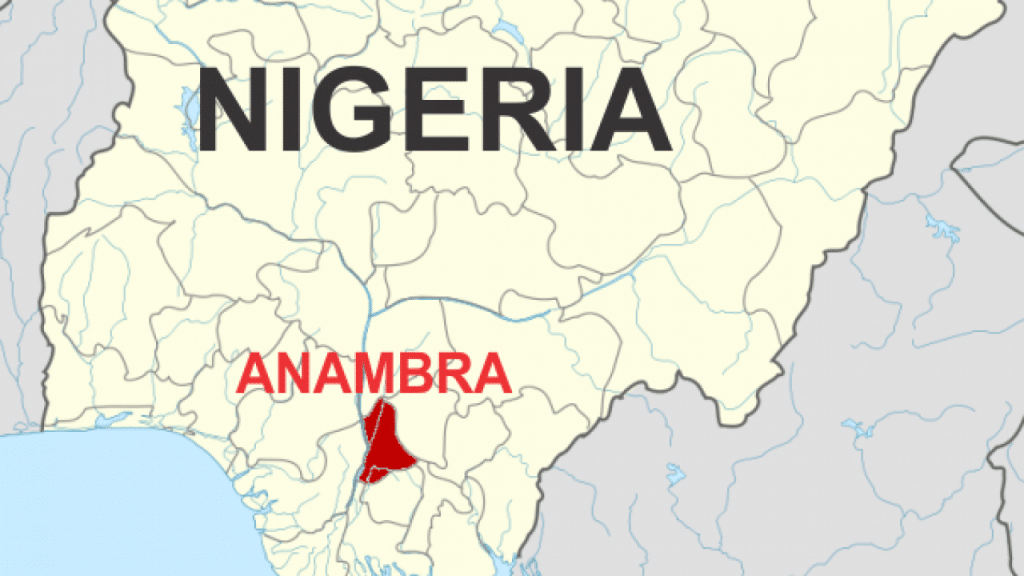
The heavy rainfall that occurred on Sunday night wreaked havoc in Ifite-Awka, Awka South Local Government Area of Anambra State, pulling down the headquarters of the Foursquare Gospel Church and destroying several buildings, structures, goods, and vital documents valued at hundreds of millions of naira.
While rainfall at night often provides the soothing atmosphere needed for sound sleep, last Sunday’s downpour brought pain, anguish, and disaster to residents and property owners along St. John Street, Ifite-Awka, in the Anambra State capital.
The devastating flood submerged homes and public compounds, collapsed structures, and destroyed valuables as residents struggled to salvage what remained of their belongings.
 A visit to the area on Tuesday evening revealed scenes of despair and destruction, as residents were seen evacuating damaged property and other valuables destroyed by the floodwaters.
According to a source, the flooding was largely caused by poor town planning, indiscriminate building construction, and inadequate supervision of property development by the Awka Capital Territory Development Authority (ACTDA).
Further findings showed that weak enforcement of building regulations by the ACTDA allowed developers to erect structures on natural waterways, thereby obstructing the free flow of water during the rainy season.
The headquarters of the Foursquare Gospel Church in Ifite-Awka was among the worst-hit structures, with the entire church compound and auditorium submerged by the flood.
Items destroyed include musical instruments such as pianos, amplifiers, and other electronic equipment, in addition to church documents and official records.
Narrating the church’s ordeal, the District head of the church, Reverend Sam Ufo, regretted that although the church had experienced flooding in the past, the magnitude of Sunday night’s disaster was unprecedented since the church moved into the area.
He explained that the church was among the earliest property developers in the neighbourhood and had complied with approved building plans and drainage designs.
However, he lamented that subsequent developments by other property owners had worsened the flood situation.
The cleric accused some residents of erecting structures on waterways originally designed to channel floodwater into a nearby canal, noting that the situation had continued to trigger perennial flooding in the area.
“We were among the first set of people that developed property in this area, and we never envisaged this kind of flood challenge. When other people started developing their properties, they raised their foundations, and each time it rained, our compound would be flooded.
“We later raised and reinforced our fences to prevent floodwater from entering the compound. Unfortunately, the rainfall on Sunday night pulled down our fences and even those of our neighbours, the Redeemed Christian Mission, forcing massive floodwater into our premises.
“We have identified that the major cause of the perennial flooding is the blockage of the drainage channel that conveys floodwater into a nearby canal. Some developers acquired the waterways, blocked them, and built structures on them, thereby causing the flooding,” he said.
Reverend Ufo appealed to both the state and local government authorities to intervene by recovering the original waterways that channel water into the canal.
He expressed fears that the flooding could become more disastrous if urgent action was not taken to compel landlords and developers to remove structures obstructing the waterways.
Also speaking, the Chairman of the street, Uzochukwu Umejiege, lamented that the area experiences severe flooding whenever it rains heavily during the rainy season.
According to him, many households lost valuable property to the flood, warning that the situation could eventually lead to loss of lives if not urgently addressed.
“Farmlands were destroyed, homes were displaced, household items were damaged, shops were flooded, and goods worth millions were lost.
“One of the major causes of this challenge is the topography of the area. Our street is usually the worst hit because it is located at the lower end of the slope.
“We appeal to the government to help us construct a larger drainage system capable of channeling water coming from other parts of Ifite-Awka so that residents here will not continue to suffer every rainy season,” he pleaded.
For Daniel Nwokolo, a tenant in one of the affected buildings, the flooding is a man-made problem that can be resolved if the appropriate authorities carry out their responsibilities effectively.
“I have lived here since 2017, and we have never witnessed flooding of this magnitude. The blockage of drainage channels caused this disaster. The floodwater comes from areas such as the Old Government House, Second Market, and Green House.
“The drainage channel here is less than two feet deep, which is grossly inadequate to contain the volume of water flowing into this area. Government needs to construct wider and deeper drainage systems capable of accommodating the floodwater.
“Government should also intensify monitoring and enforcement of development activities to ensure compliance with building standards and prevent developers from creating problems that will endanger other residents in the future,” he said.
About Author